Cubital tunnel syndrome is pressure on the ulnar nerve at the inner elbow, causing numbness in the ring and little fingers and hand weakness. Dr. Levongood treats cubital tunnel syndrome in Lawrenceville, starting with night splinting and activity changes, and offering cubital tunnel release surgery when symptoms persist or the hand weakens.
Gary Levongood diagnoses and treats cubital tunnel syndrome in Lawrenceville, from the first visit through recovery.
What is Cubital Tunnel Syndrome?
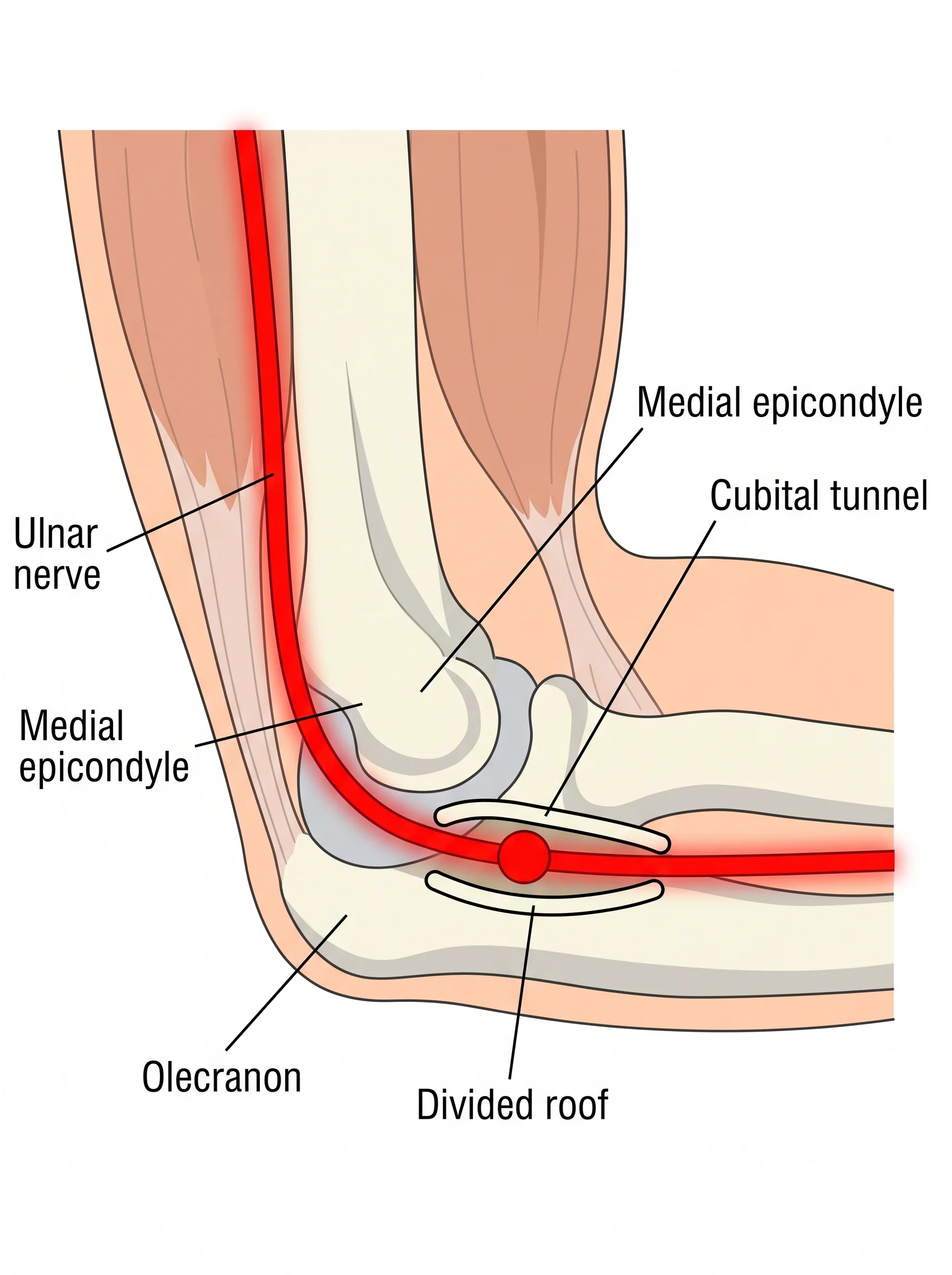
The ulnar nerve is the nerve that gives the funny bone feeling when you bump your elbow.
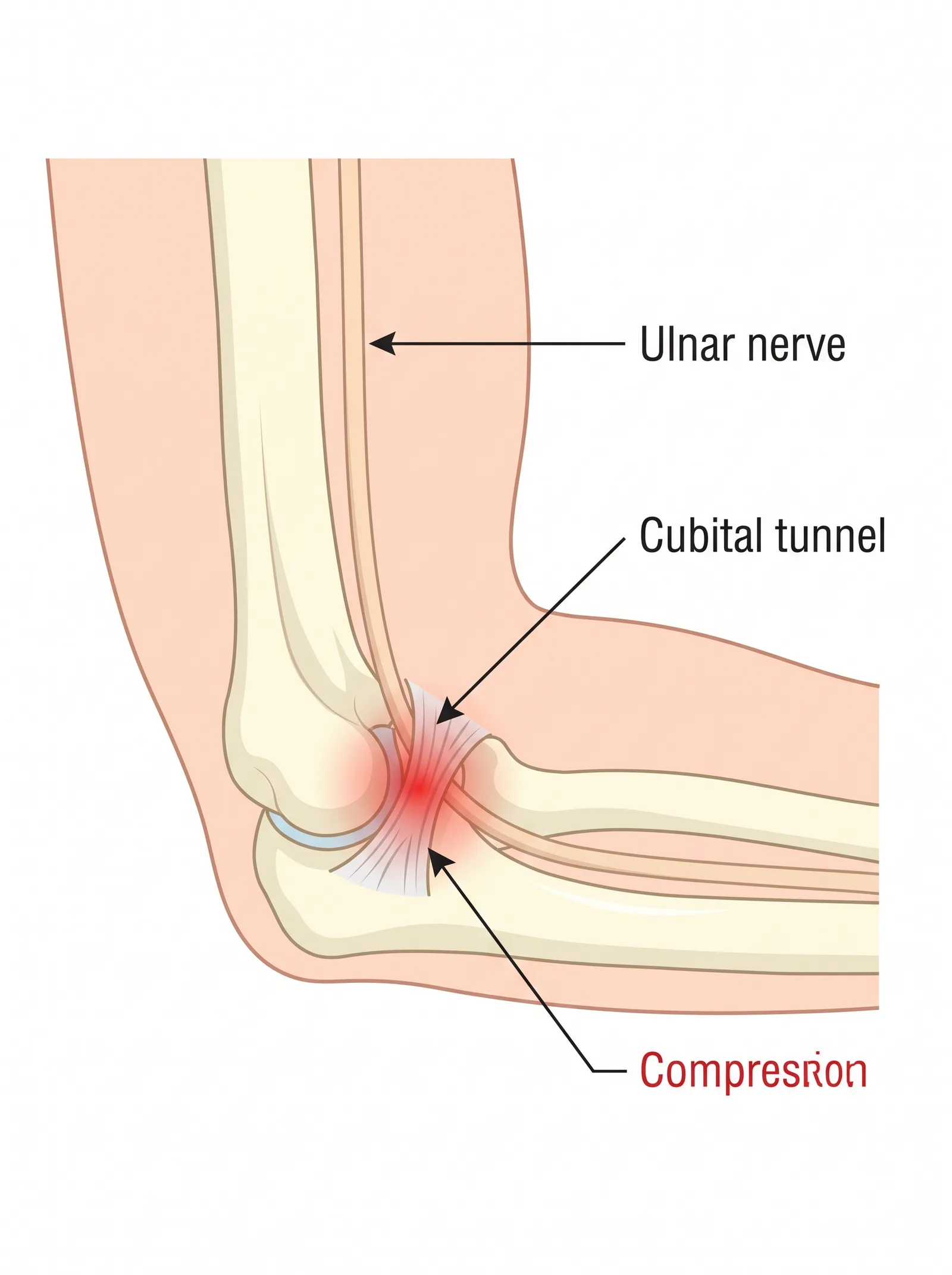
It passes through the cubital tunnel, a narrow channel on the inner side of the elbow. When the nerve is squeezed or stretched there, cubital tunnel syndrome develops.
Symptoms include numbness and tingling in the ring and little fingers, often worse when the elbow is bent, such as while holding a phone or sleeping. Over time the hand can weaken, grip loosens, and fine tasks like typing or handling coins become harder.
Keeping the elbow bent for long stretches, leaning on the elbow, and past elbow injuries can all contribute. Catching it early gives non-surgical care a better chance.
How is Cubital Tunnel Syndrome diagnosed, and what does the visit involve?
Diagnosis starts with your history and an exam of the hand and elbow.
Your physician may tap over the nerve or hold the elbow bent to see if symptoms appear. A nerve conduction study, a test that measures how well the ulnar nerve carries signals, confirms the diagnosis and shows how much the nerve is affected. These tests also help separate elbow nerve pressure from a pinched nerve in the neck.
What is recovery like for Cubital Tunnel Syndrome?
Mild to moderate cases often improve with night splinting and activity changes over several weeks.
When numbness is constant or the hand muscles are weakening, nerve testing helps decide whether surgery is the better path. Earlier treatment of a badly compressed nerve gives a better chance of recovery. Your physician will explain what your results suggest.
What are the treatment options?
- 01Activity changes to avoid long periods with the elbow fully bent or leaning on itActivity changes to avoid long periods with the elbow fully bent or leaning on it.
- 02A splint or padded wrap worn at night to keep the elbow gently straightA splint or padded wrap worn at night to keep the elbow gently straight.
- 03Hand therapy, including nerve-gliding exercisesHand therapy, including nerve-gliding exercises.
- 04Cubital tunnel release, a surgery that relieves pressure on the ulnar nerve and sometimesCubital tunnel release, a surgery that relieves pressure on the ulnar nerve and sometimes moves it to a roomier position, is considered when numbness is constant, when the hand is weakening, or when nerve testing shows the nerve is being damaged.
What do patients ask most?
Why are only my ring and little fingers numb?+
Can I fix cubital tunnel syndrome without surgery?+
Why is it worse at night?+
What happens if I ignore it?+
Fellowship trained at The Hughston Clinic (Sports Medicine). Sees patients in Lawrenceville.
About Dr. Levongood →