Shoulder
Shoulder conditions and procedures, each explained in plain language, from the first visit through recovery.

Shoulder conditions Dr. Levongood treats
Each page explains the condition, how it is diagnosed and every treatment option.
Shoulder procedures
When non-surgical care is not enough, these are the procedures Dr. Levongood performs. Each page covers who it is for, how it is done, and what recovery generally looks like.
What does this area do?
The shoulder is a ball-and-socket joint.
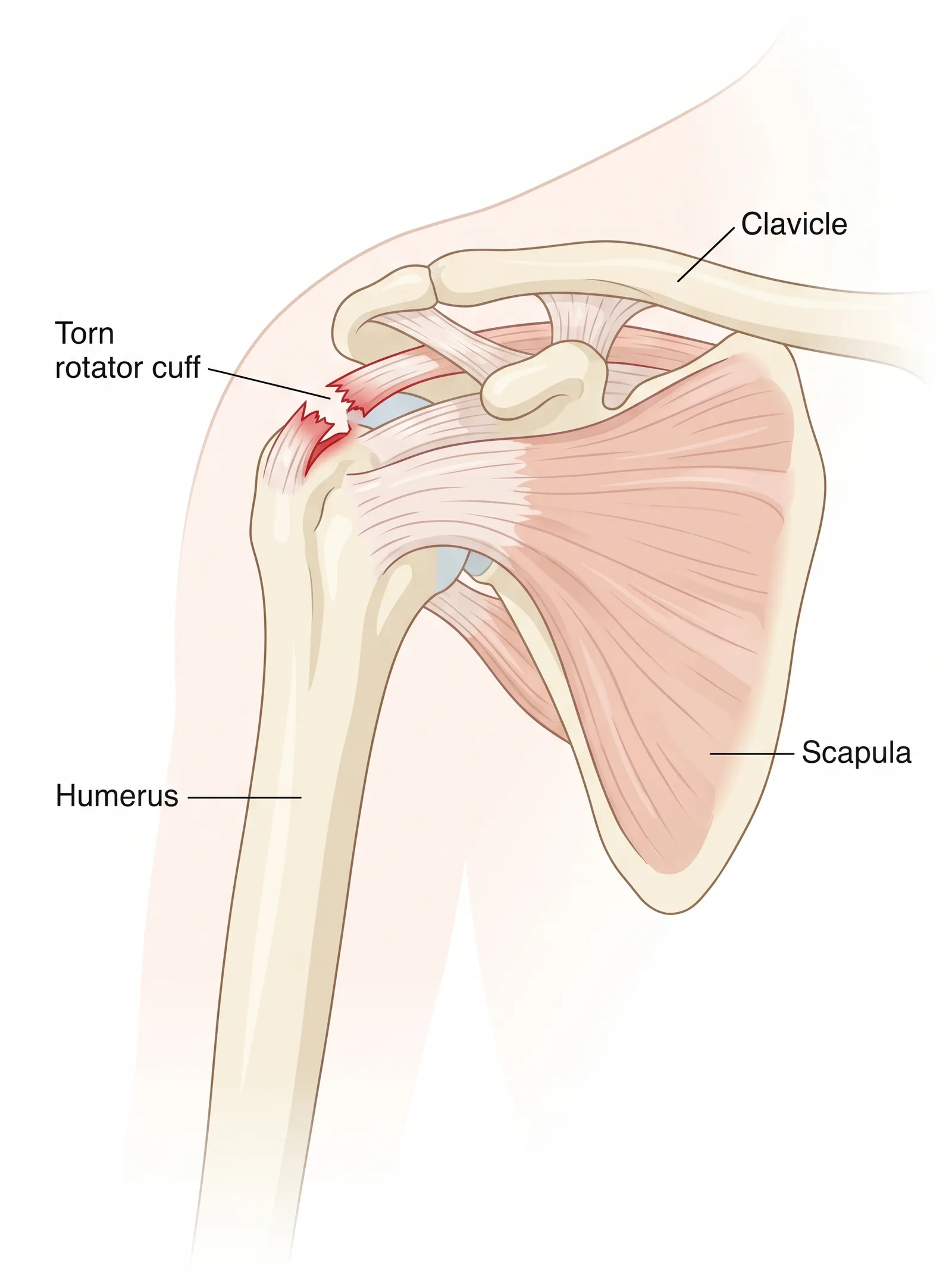
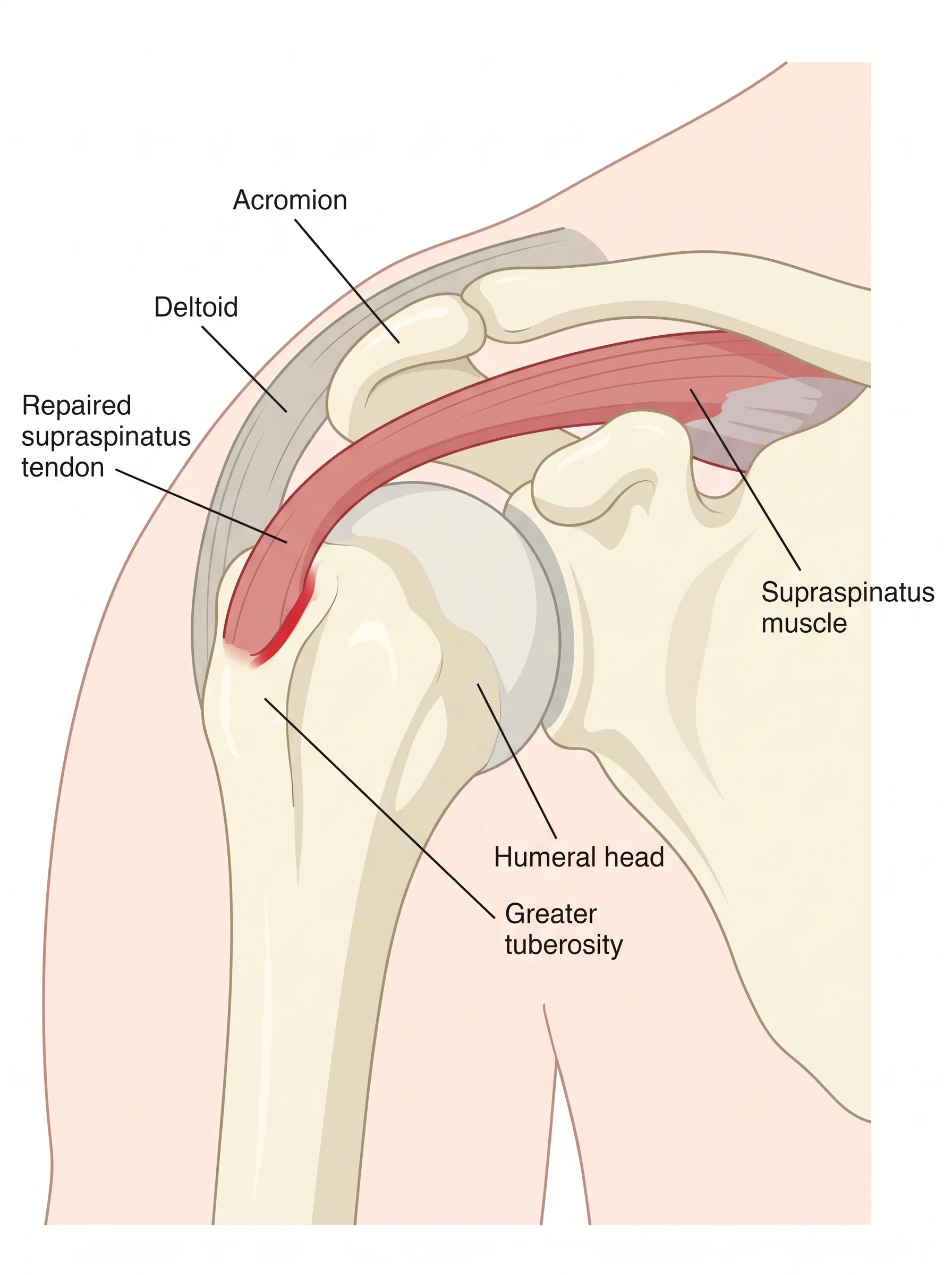
The rounded top of the upper arm bone (the humerus) sits in a shallow socket on the shoulder blade (the scapula). Because the socket is shallow, the shoulder can move in almost every direction.
Several tissues keep the joint working. The rotator cuff is a group of four muscles and their tendons that hold the ball in the socket and help you raise and rotate your arm. The labrum is a rim of cartilage that deepens the socket and adds stability. Cartilage is a smooth tissue that covers bone ends so they glide. A bursa, which is a small fluid-filled sac, cushions the space between bone and tendon.
Together, these parts let you reach overhead, lift objects, and move your arm smoothly.
Which problems are commonly seen in this area?
Shoulder problems often come from overuse, aging tissue, or a fall.
Common ones include the following.
- Rotator cuff problems, from irritation to a tear. See the rotator cuff page.
- Shoulder impingement, when tendons are pinched during overhead motion. See the shoulder impingement page.
- Frozen shoulder, when the joint becomes stiff and painful. See the frozen shoulder page.
- Shoulder instability or dislocation, when the ball slips out of the socket. See the shoulder instability page.
- Shoulder osteoarthritis, a gradual wearing of cartilage. See the shoulder arthritis page.
How are problems here evaluated?
A shoulder visit usually begins with questions about your symptoms and daily activities.
The physician then examines the shoulder, checking how far it moves, where it hurts, and how strong the muscles feel. Certain gentle tests can point to the rotator cuff or the labrum.
Imaging often follows. An X-ray shows bone and can reveal arthritis or a break. An MRI, which stands for magnetic resonance imaging, shows soft tissues like the rotator cuff and labrum in more detail. An ultrasound is sometimes used to view tendons as you move. The physician chooses imaging based on the exam.
What is the treatment approach?
Most shoulder problems are treated without surgery first.
Conservative care means treatment that does not involve an operation. This can include rest, activity changes, physical therapy to restore motion and strength, and medicines that reduce pain and swelling. An injection into or around the joint may help some conditions.
If symptoms continue after a fair trial of conservative care, or if a tear is large, the physician may discuss a procedure. Surgery is considered when the problem limits daily life and simpler steps have not brought enough relief.
Recovery time depends on the problem and treatment. According to general guidance from the American Academy of Orthopaedic Surgeons, recovery from mild shoulder irritation often takes a few weeks, while recovery from a rotator cuff repair can take several months. These are ranges, not promises. Your own path depends on your health and how your body heals.
Which warning signs should you call about?
Consider seeing an orthopedic specialist if shoulder pain lasts more than a few weeks, if you cannot raise your arm, if the shoulder feels loose or slips, or if pain wakes you at night.
An orthopedic specialist is a physician who focuses on bones, joints, and the tissues around them. Early evaluation helps you understand the cause and plan next steps.
Which conditions and procedures does this practice treat here?
This practice treats rotator cuff irritation and tears, Shoulder impingement, Frozen shoulder, Shoulder instability and dislocation, Shoulder osteoarthritis, Shoulder arthroscopy, a procedure that uses a small camera inside the joint, and Shoulder replacement in this area.
Shoulder questions
Do I need surgery for shoulder pain?+
Why does my shoulder hurt more at night?+
Will my insurance cover my visit or procedure?+
Talk to Dr. Levongood about your shoulder
Call the office or request an appointment. Accepting new patients.