UCL reconstruction, known as Tommy John surgery, rebuilds the torn ulnar collateral ligament on the inside of the elbow with a tendon graft so a throwing athlete can return to the sport. Dr. Levongood performs UCL reconstruction in Lawrenceville for complete tears and for partial tears that have not healed with rest and rehabilitation.
Gary Levongood performs ucl reconstruction (tommy john) in Lawrenceville when it is the right step, and reviews every alternative with you first.
What is UCL reconstruction?
The ulnar collateral ligament, UCL, is the band on the inside of the elbow that holds the joint steady against the force of throwing.
Repeated hard throwing, in baseball pitchers above all, can stretch and tear it. A torn UCL lets the elbow open on the inside during a throw, which causes pain, loss of velocity and control, and sometimes numbness into the ring and small fingers.
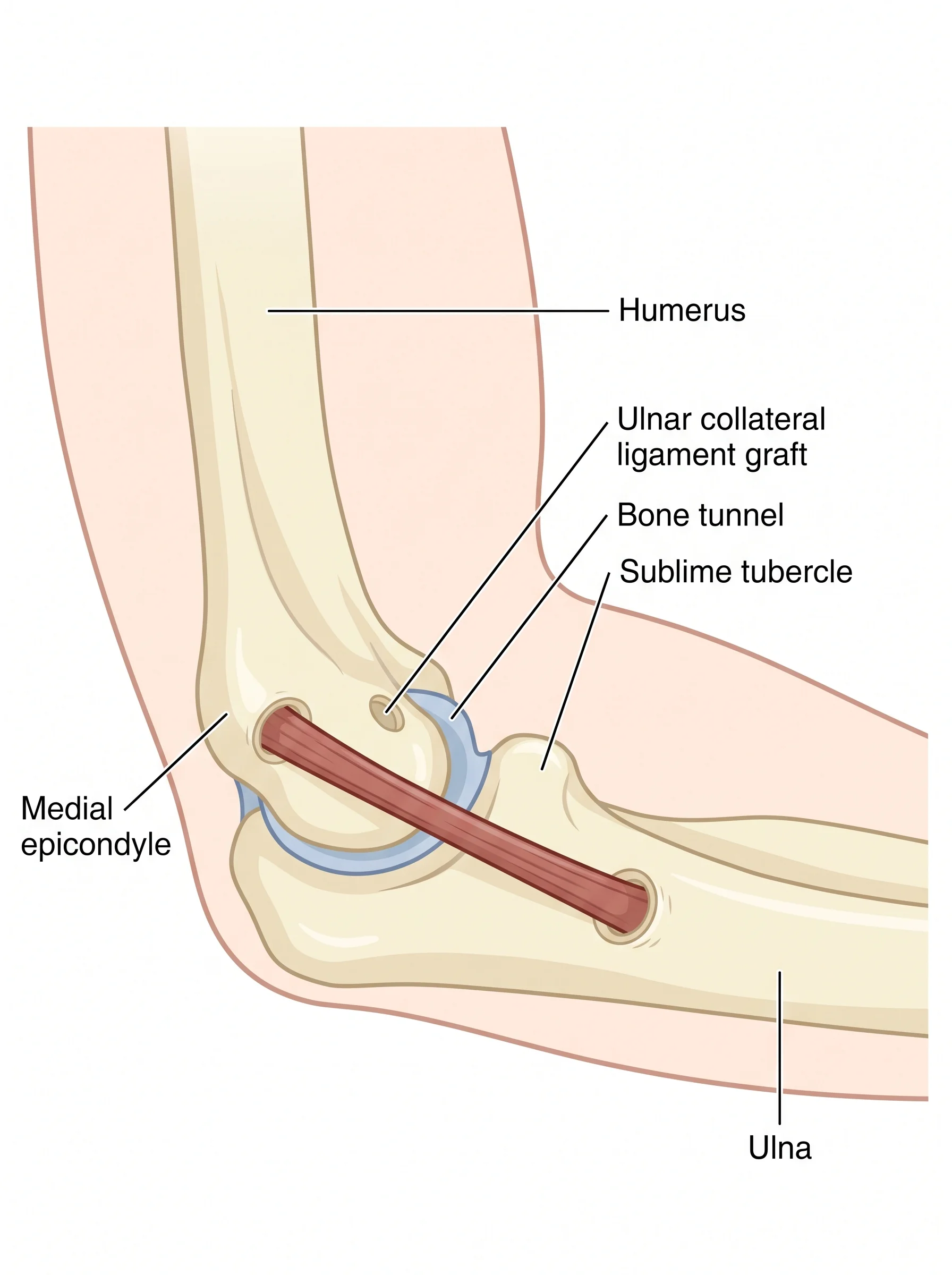
UCL reconstruction replaces the torn ligament with a tendon graft, usually taken from the forearm or the hamstring, threaded through tunnels drilled in the bones on either side of the joint and fixed in place. It is known as Tommy John surgery after the first pitcher to have it. Some partial tears at the ligament's attachment can instead be repaired with a suture and a reinforcing tape, which is a shorter recovery.
What happens during UCL reconstruction?
The operation is done as an outpatient under a nerve block with sedation or a general anesthetic.
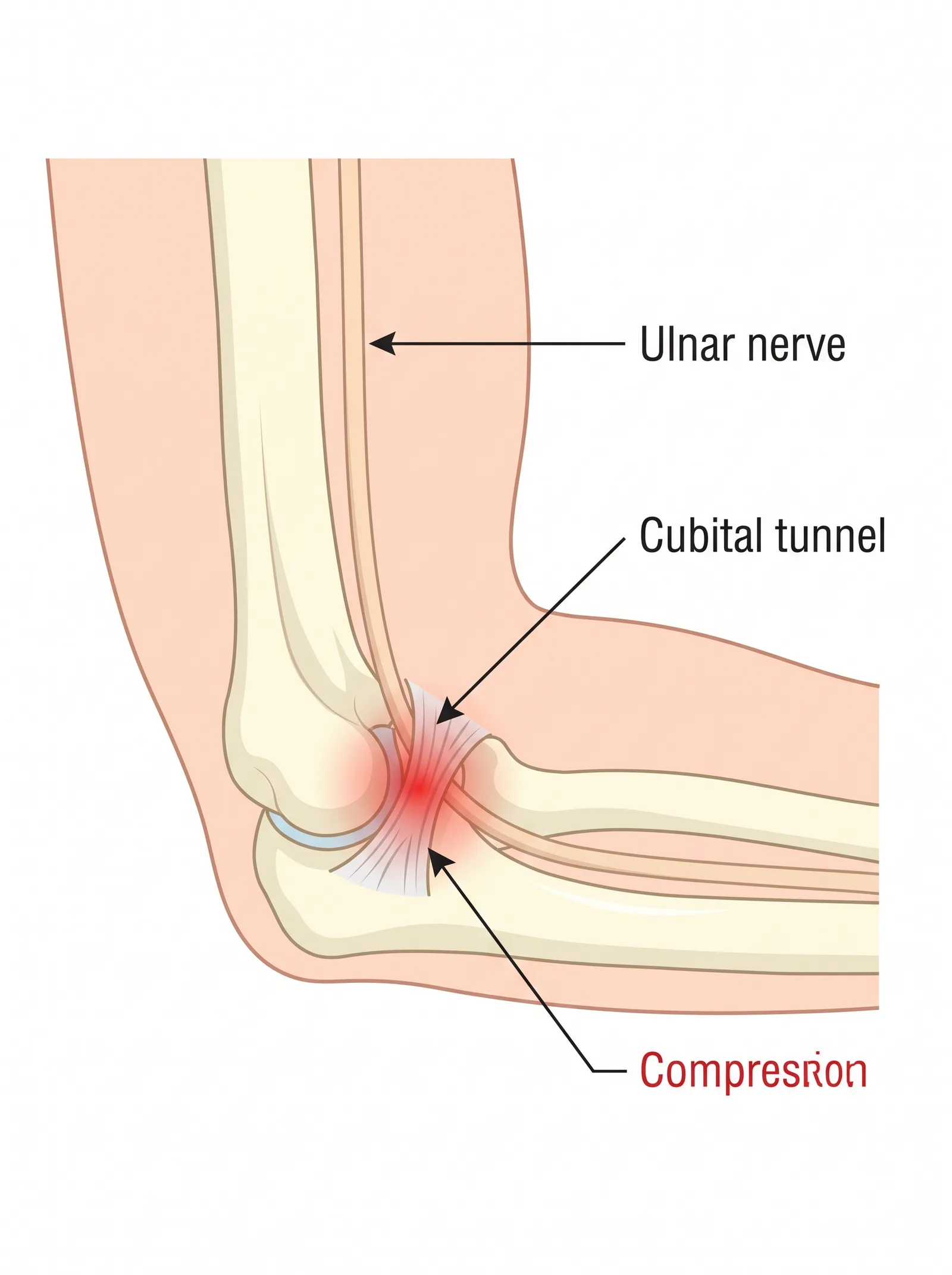
Through an incision on the inside of the elbow, the surgeon protects the ulnar nerve, which runs close by, and exposes the torn ligament. A tendon graft is harvested, most often the palmaris longus tendon from the forearm, which most people do not need, or a hamstring tendon. Tunnels are drilled in the humerus and the ulna, the graft is passed through them in a figure-of-eight or docked into the tunnels, tensioned, and fixed. When the ulnar nerve has been irritated, it is moved to the front of the elbow. The incision is closed and a splint applied. The operation commonly takes one to two hours.
What is recovery like after UCL reconstruction?
Recovery is long, because the graft has to turn into a living ligament before it can take the force of throwing.
The elbow is splinted for the first week or two, then moved in a hinged brace as motion returns. Strengthening builds over months. A return-to-throwing program usually begins around four months and progresses in stages; a return to competitive pitching is commonly reported at twelve to eighteen months, according to general guidance from the American Academy of Orthopaedic Surgeons. Daily activities and desk work resume within weeks; physical work takes longer. UCL repair with tape has a shorter course, often with throwing by six months. These are ranges, not promises, and the return-to-sport decision is made on strength, mechanics, and comfortable throwing, not on the calendar.
Read the full guide to preparing for surgery →
Your own recovery instructions come from the office and are specific to you. This page describes the general course, not a plan to follow.
What do patients ask most?
Will I throw harder after Tommy John surgery?+
Repair or reconstruction?+
How long until I can pitch again?+
Can a UCL tear heal without surgery?+
What are the treatment options?
- 01Rest from throwing for several weeks to months, with ice and anti-inflammatory medicine foRest from throwing for several weeks to months, with ice and anti-inflammatory medicine for a flare, when safe for you
- 02Physical therapy for the shoulder, elbow, forearm, and core, since throwing mechanics loadPhysical therapy for the shoulder, elbow, forearm, and core, since throwing mechanics load the elbow
- 03A structured return-to-throwing program once the elbow is comfortableA structured return-to-throwing program once the elbow is comfortable
- 04A brace or activity changes for the non-throwing lifeA brace or activity changes for the non-throwing life
- 05An orthobiologic injection for a partial tear, in some casesAn orthobiologic injection for a partial tear, in some cases
- 06UCL repair with a suture and tape for a suitable partial tearUCL repair with a suture and tape for a suitable partial tear
- 07UCL reconstruction for a complete tear, or a partial tear that has not healed with the steUCL reconstruction for a complete tear, or a partial tear that has not healed with the steps above, in an athlete who intends to return to throwing
Fellowship trained at The Hughston Clinic (Sports Medicine). Sees patients in Lawrenceville.
About Dr. Levongood →