Elbow arthroscopy is a procedure that uses a small camera through tiny incisions to diagnose and treat problems inside the elbow, such as loose fragments, stiffness, and cartilage damage. Dr. Levongood performs elbow arthroscopy in Lawrenceville when non-surgical care does not resolve elbow pain, catching, or stiffness.
Gary Levongood performs elbow arthroscopy in Lawrenceville when it is the right step, and reviews every alternative with you first.
What is Elbow Arthroscopy?
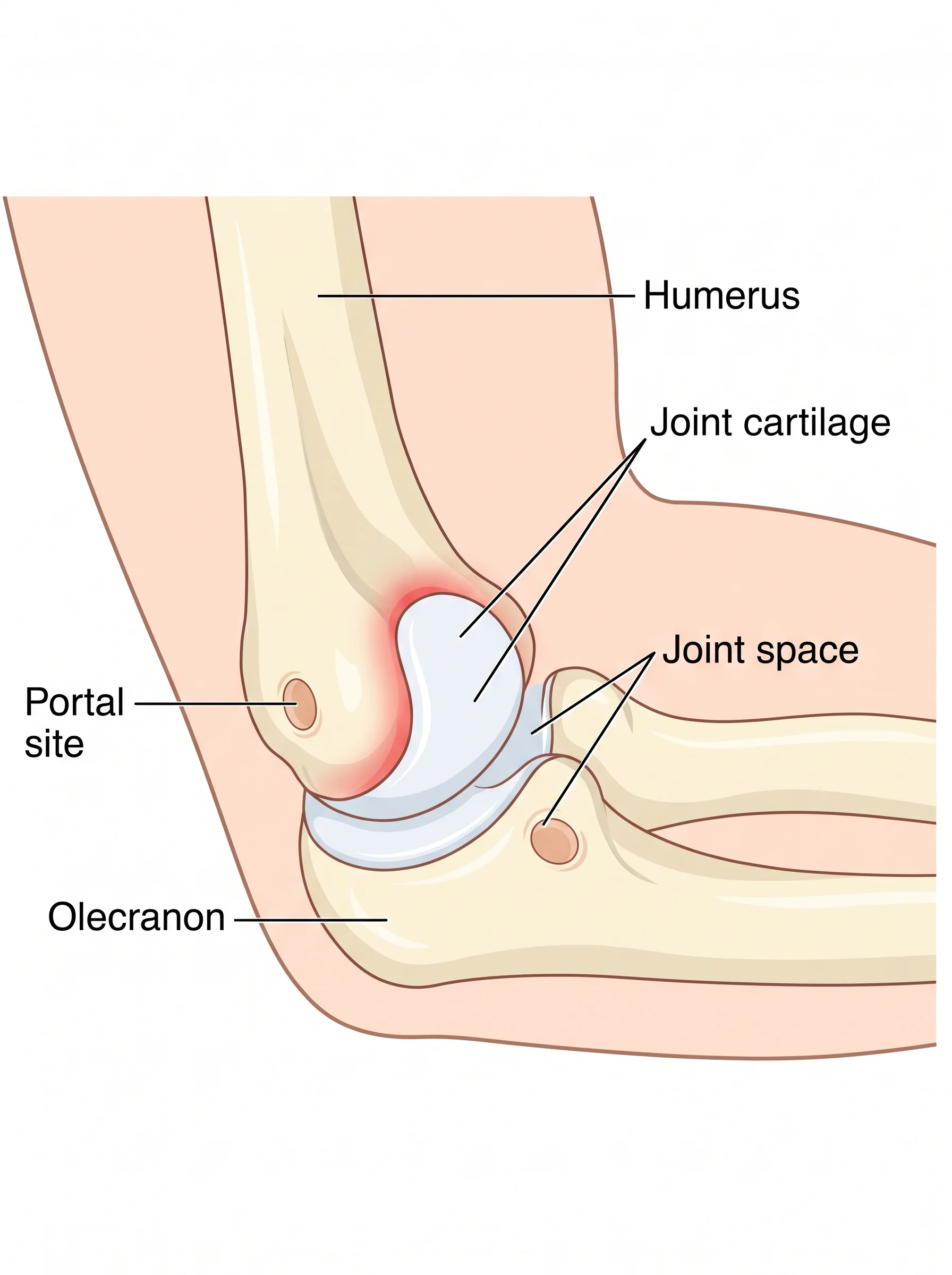
The elbow is a hinge joint where the upper-arm bone meets the two forearm bones.
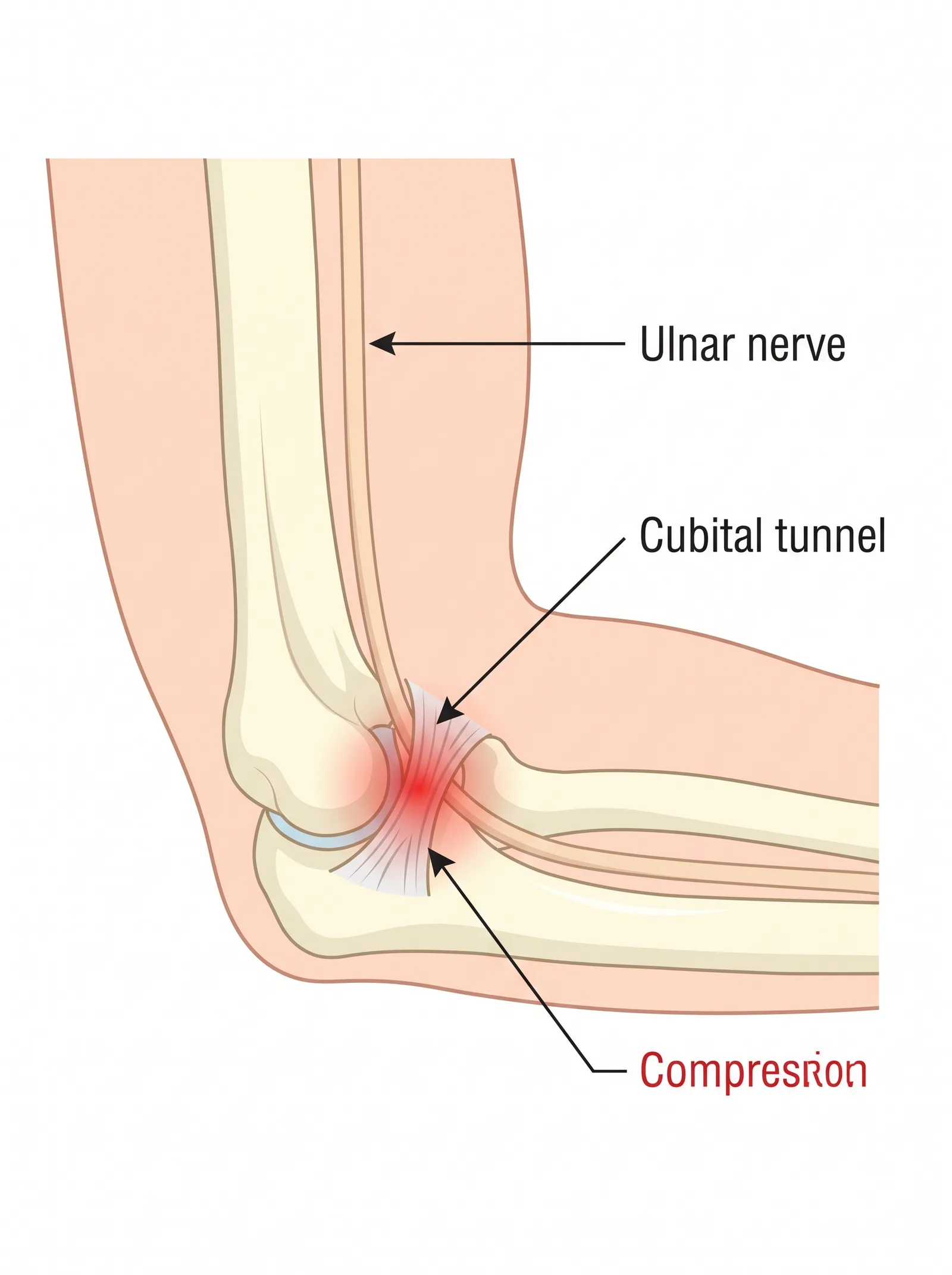
Loose pieces of cartilage or bone, worn surfaces, inflamed tissue, or scarring can cause pain, catching, locking, or trouble fully bending and straightening the arm.
Elbow arthroscopy, arthroscopy meaning a small camera passed through tiny incisions, lets the surgeon see inside the joint and treat many of these problems through small openings. Fine instruments can remove loose fragments, smooth cartilage, remove inflamed tissue, or release scar tissue that limits motion.
Because the incisions are small, elbow arthroscopy is used both to find the cause of stubborn elbow problems and to treat them. It is usually done as an outpatient.
What happens during Elbow Arthroscopy, step by step?
The surgeon makes a few small incisions around the elbow and inserts a thin camera and fine instruments.
The joint is filled with fluid so the surgeon can see clearly on a screen. Depending on what is found, the surgeon may remove loose bone or cartilage fragments, smooth damaged surfaces, remove inflamed lining, or release scar tissue to improve motion. Because important nerves run near the elbow, the surgeon works carefully around them. Your physician will explain what was found and done.
What is recovery like after Elbow Arthroscopy?
Recovery depends on what was treated.
A clean-up of loose fragments often allows a quicker return, while a release for stiffness usually needs early therapy to keep the motion that was gained. Many people return to light activity within a few weeks, with fuller recovery over one to three months, according to general guidance from the American Academy of Orthopaedic Surgeons. These are ranges, not promises. Hand and elbow therapy is commonly used to rebuild motion and strength. Your physician will tailor the plan.
Read the full guide to preparing for surgery →
Your own recovery instructions come from the office and are specific to you. This page describes the general course, not a plan to follow.
What do patients ask most?
What can elbow arthroscopy treat?+
Are the incisions small?+
Why is therapy important after surgery for stiffness?+
How long until I recover?+
What are the treatment options?
- 01Rest, activity changes, and anti-inflammatory measuresRest, activity changes, and anti-inflammatory measures.
- 02Bracing or splinting when appropriateBracing or splinting when appropriate.
- 03Therapy to restore motion and strengthTherapy to restore motion and strength.
- 04Imaging such as X-ray or MRI to identify the problemImaging such as X-ray or MRI to identify the problem.
- 05Elbow arthroscopy is considered when pain, catching, locking, or stiffness continues and iElbow arthroscopy is considered when pain, catching, locking, or stiffness continues and imaging points to a treatable problem inside the joint.
Fellowship trained at The Hughston Clinic (Sports Medicine). Sees patients in Lawrenceville.
About Dr. Levongood →