Tennis elbow is pain on the outer elbow from overuse of the tendons that straighten the wrist. Dr. Levongood treats tennis elbow in Lawrenceville, starting with rest, therapy, bracing, and injections, and offering tennis elbow release surgery in the small number of cases that do not settle with time and non-surgical care.
Gary Levongood diagnoses and treats tennis elbow in Lawrenceville, from the first visit through recovery.
What is Tennis Elbow?
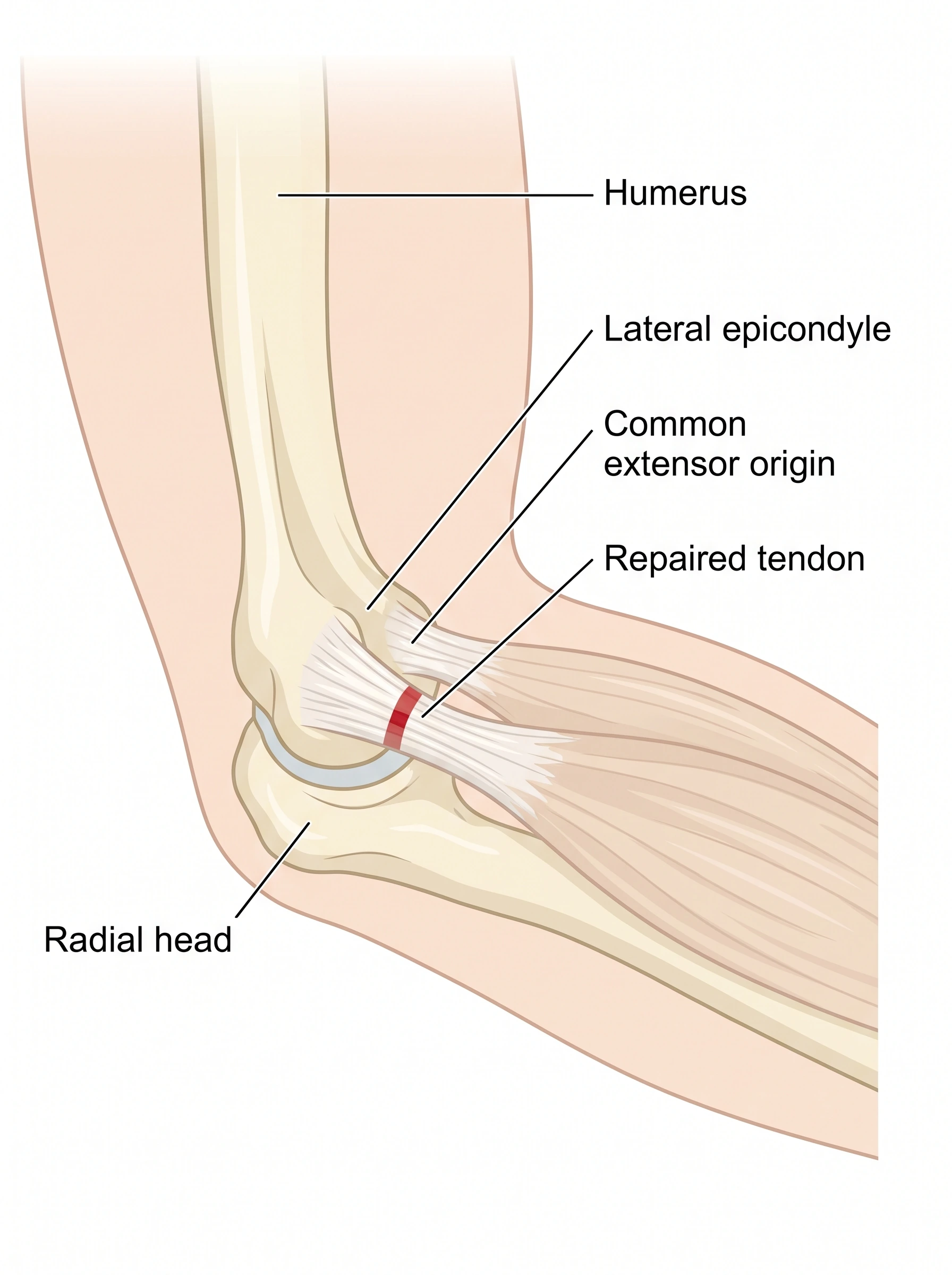
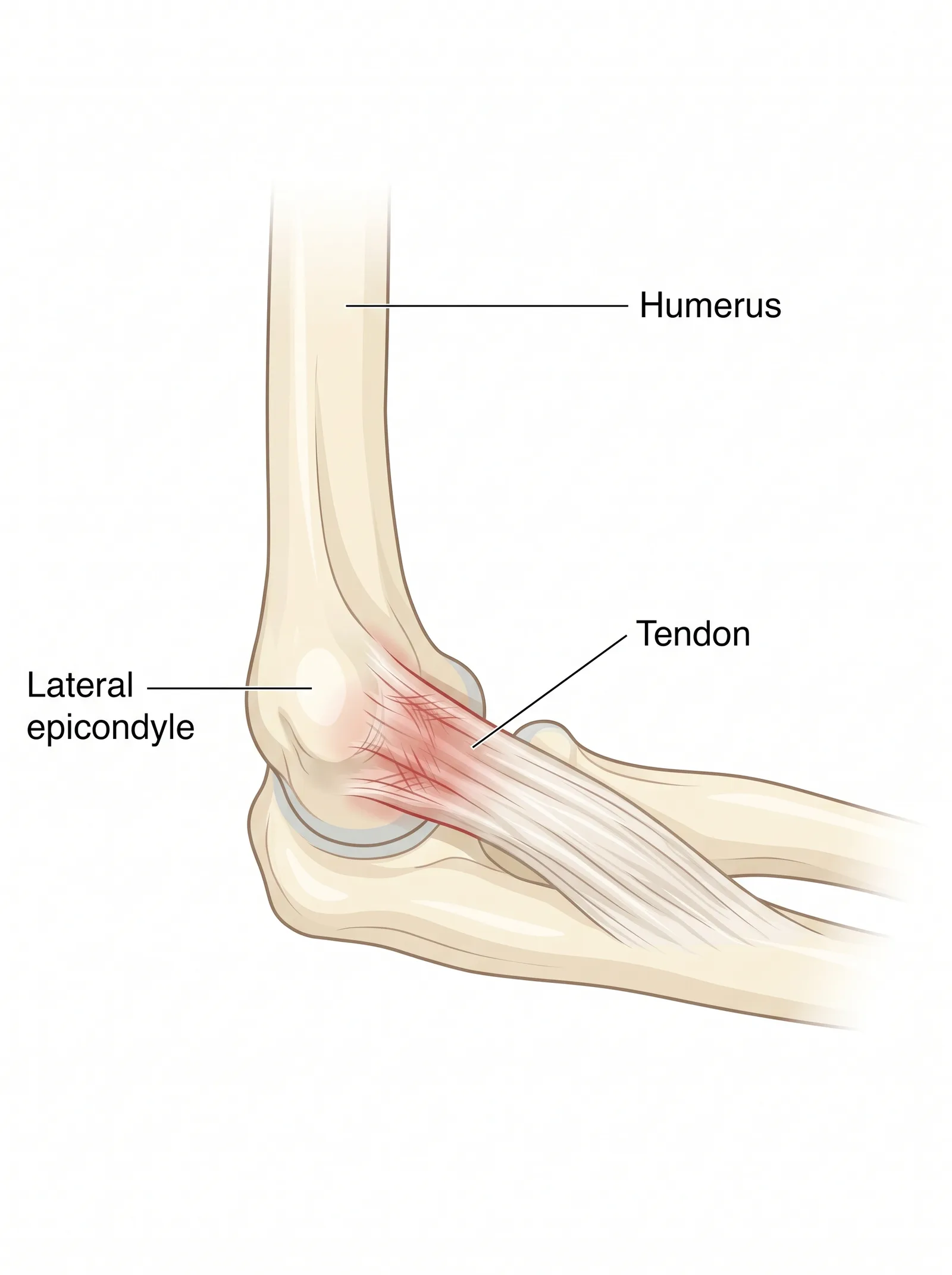
Tennis elbow, known medically as lateral epicondylitis, is irritation of the tendons that attach to the bony bump on the outer side of the elbow.
These tendons connect the muscles that straighten the wrist and fingers. Despite the name, most people who get it do not play tennis.
The main symptom is pain and tenderness on the outer elbow that can spread down the forearm. It flares with gripping, lifting, shaking hands, or turning a doorknob. The pain comes from small tears and wear in the tendon, not from a single injury.
Tennis elbow is usually caused by repeated wrist and forearm motions over time. It is most common in the working-age years and often improves on its own, though that can take many months.
How is Tennis Elbow diagnosed, and what does the visit involve?
Tennis elbow is usually diagnosed by history and exam.
Your physician presses over the outer elbow and asks you to extend the wrist against gentle resistance to reproduce the pain. Imaging is not always needed, but an ultrasound or MRI, a scan that shows soft tissue in detail, may be used when the diagnosis is unclear or symptoms drag on. These tests also help rule out other elbow problems.
What is recovery like for Tennis Elbow?
Tennis elbow often resolves with time and a steady exercise program, though improvement can take several months to a year, according to general guidance from the American Academy of Orthopaedic Surgeons.
These are ranges, not promises. A gradual strengthening plan tends to help more than rest alone. Surgery is needed in only a small share of cases. Your physician will set expectations based on how long you have had symptoms and how they respond.
What are the treatment options?
- 01Rest from the activities that trigger pain and short-term activity changesRest from the activities that trigger pain and short-term activity changes.
- 02A counterforce brace, a strap worn on the forearm to unload the tendonA counterforce brace, a strap worn on the forearm to unload the tendon.
- 03Hand and elbow therapy, especially strengthening exercises that load the tendon graduallyHand and elbow therapy, especially strengthening exercises that load the tendon gradually.
- 04Anti-inflammatory measures and, in some cases, an injection to calm a flareAnti-inflammatory measures and, in some cases, an injection to calm a flare.
- 05Tennis elbow release, a surgery that removes the worn part of the tendon and reattaches heTennis elbow release, a surgery that removes the worn part of the tendon and reattaches healthy tissue, is considered only when pain persists after many months of consistent non-surgical care.
What do patients ask most?
Do I have to play tennis to get tennis elbow?+
How long does tennis elbow take to get better?+
Are steroid injections a good idea?+
When is surgery considered?+
Fellowship trained at The Hughston Clinic (Sports Medicine). Sees patients in Lawrenceville.
About Dr. Levongood →