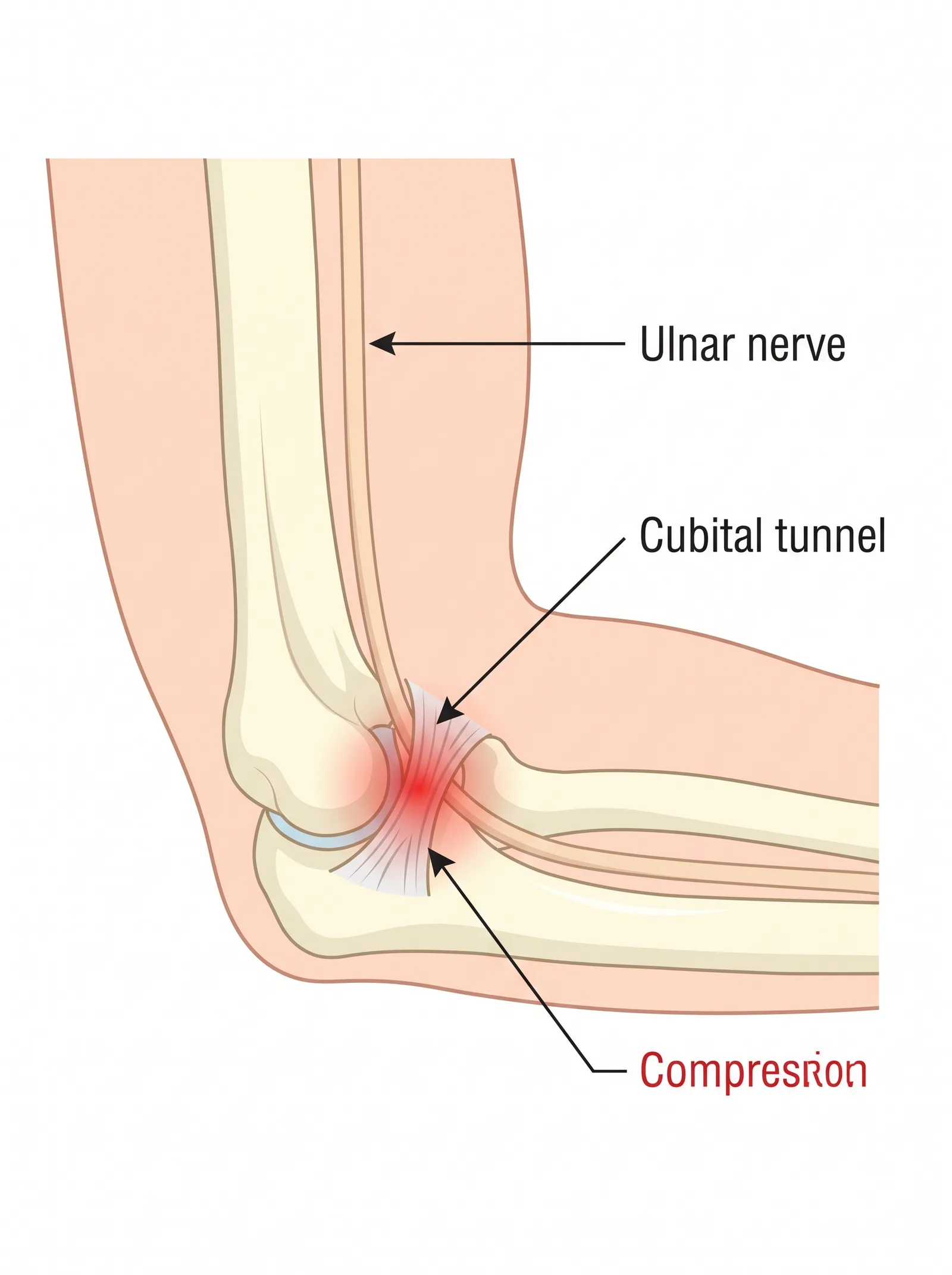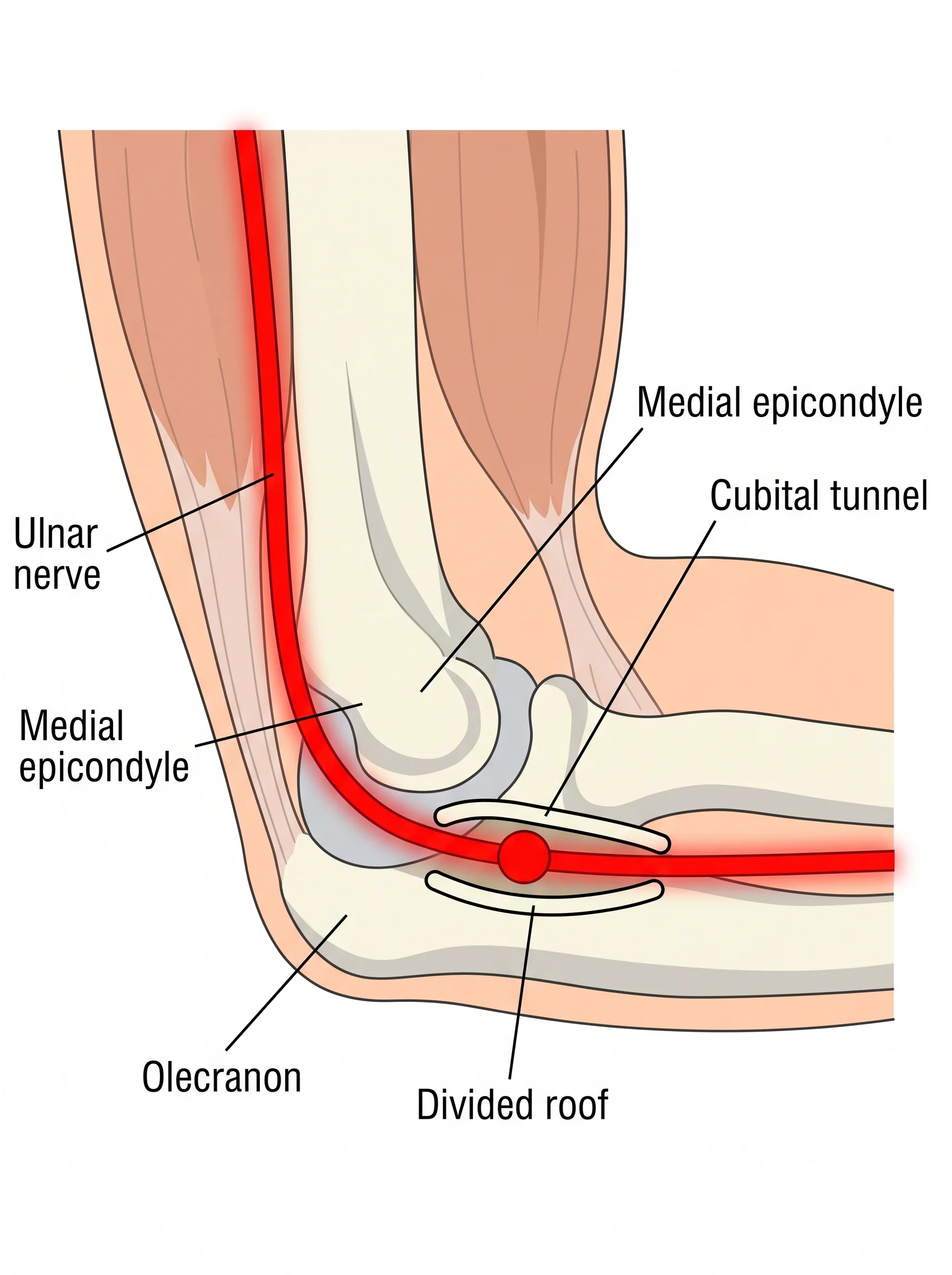
Cubital tunnel release is a procedure that relieves pressure on the ulnar nerve at the inner elbow. Dr. Levongood performs cubital tunnel release in Lawrenceville for cubital tunnel syndrome that causes constant numbness or hand weakness and does not improve with splinting and activity changes.
Gary Levongood performs cubital tunnel release in Lawrenceville when it is the right step, and reviews every alternative with you first.
What is Cubital Tunnel Release?
Cubital tunnel syndrome is pressure on the ulnar nerve, the nerve behind the funny bone, as it passes through a narrow channel on the inner side of the elbow.
The pressure causes numbness in the ring and little fingers and can weaken the hand.
Cubital tunnel release relieves that pressure. In some cases the surgeon also moves the nerve to a roomier position in front of the elbow so it is not stretched when the elbow bends.
The procedure is usually done as an outpatient. It is chosen when non-surgical care does not hold, when numbness is constant, or when nerve testing shows the nerve is being damaged.
What happens during Cubital Tunnel Release, step by step?
In a simple decompression, the surgeon opens the tight tissue over the cubital tunnel so the ulnar nerve has more room.
In a transposition, the surgeon moves the nerve to the front of the elbow so it is not stretched or pinched when the elbow bends. Which approach fits depends on how the nerve behaves and your anatomy. Your physician will explain the plan and what to expect. The surgery is usually done through an incision on the inner elbow.
What is recovery like after Cubital Tunnel Release?
Recovery varies with the technique used.
A simple decompression often allows earlier elbow motion, while a transposition may involve a period of protected motion. Numbness and tingling can improve gradually over weeks to months, and nerve recovery continues over a longer period, according to general guidance from the American Academy of Orthopaedic Surgeons. These are ranges, not promises. If the nerve was compressed for a long time, some numbness or weakness may remain. Your physician and therapist will guide your recovery.
Read the full guide to preparing for surgery →
Your own recovery instructions come from the office and are specific to you. This page describes the general course, not a plan to follow.
What do patients ask most?
Will the nerve be moved during surgery?+
How soon will the numbness improve?+
Is it a same-day surgery?+
Can symptoms come back after surgery?+
What are the treatment options?
- 01Activity changes to avoid long periods with the elbow fully bent or leaning on itActivity changes to avoid long periods with the elbow fully bent or leaning on it.
- 02A splint or padded wrap worn at night to keep the elbow gently straightA splint or padded wrap worn at night to keep the elbow gently straight.
- 03Hand therapy with nerve-gliding exercisesHand therapy with nerve-gliding exercises.
- 04Cubital tunnel release is considered when numbness is constant, when the hand is weakeningCubital tunnel release is considered when numbness is constant, when the hand is weakening, or when nerve testing shows the nerve is being damaged.
Fellowship trained at The Hughston Clinic (Sports Medicine). Sees patients in Lawrenceville.
About Dr. Levongood →