Cubital tunnel syndrome is pressure on a nerve at the inner elbow, the funny bone nerve. It causes numbness in the ring and little fingers and can weaken the hand. Many people improve with activity changes and a night splint. A procedure can relieve the pressure when symptoms persist or the hand weakens.
Gary Levongood diagnoses and treats cubital tunnel syndrome in Lawrenceville, from the first visit through recovery.
What is Cubital Tunnel Syndrome?
Cubital tunnel syndrome is the second most common nerve compression in the arm, after carpal tunnel syndrome.
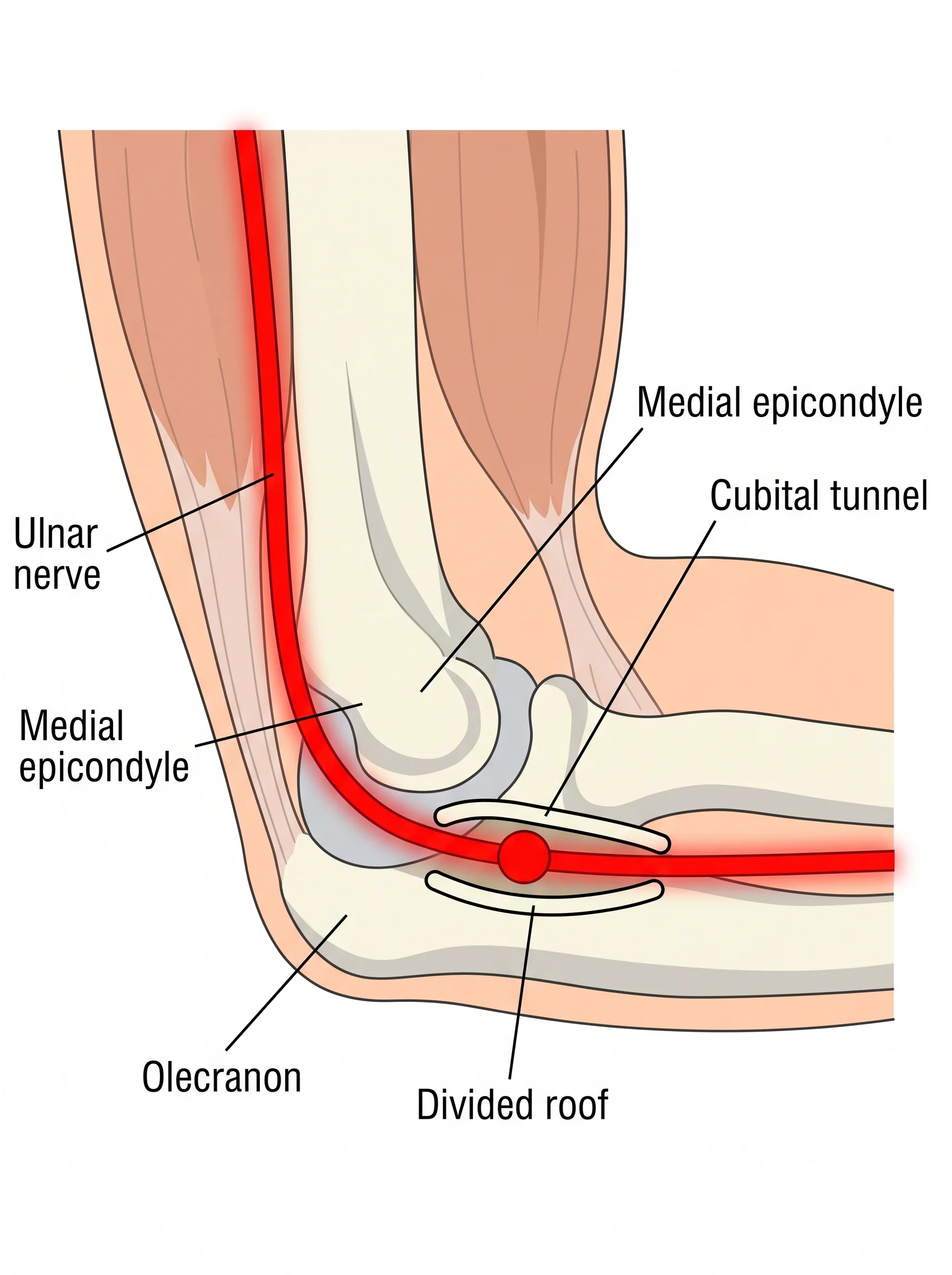
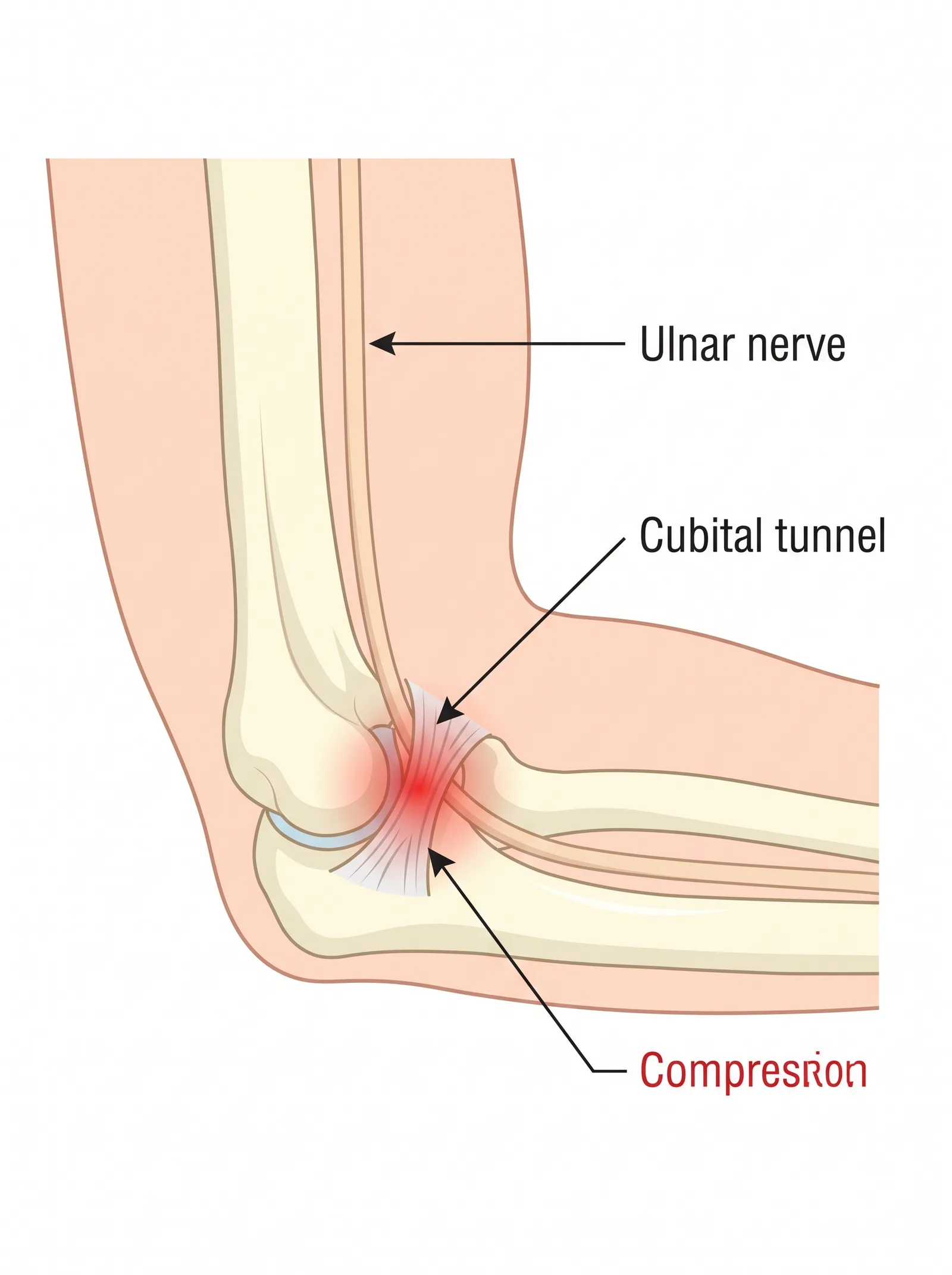
It involves the ulnar nerve, one of the main nerves of the hand and arm. The ulnar nerve is the one behind the funny bone feeling. When you hit the inside of your elbow and feel a jolt into the little finger, that is the ulnar nerve. At the elbow, the nerve passes through a snug channel called the cubital tunnel, on the inner side of the joint. Because the nerve sits close to the surface here, it is easy to compress or stretch.
Cubital tunnel syndrome happens when the ulnar nerve is pressed or stretched at the elbow. Bending the elbow tightens and stretches the nerve, which is why symptoms often come on while holding a phone, sleeping with a bent elbow, or leaning on the elbow. Over time, this pressure can irritate the nerve and interfere with the signals it carries.
The ulnar nerve carries feeling from the little finger and half of the ring finger. It also controls many of the small muscles in the hand that handle fine movements and grip. This is why cubital tunnel syndrome causes numbness in those fingers and, in more advanced cases, weakness and clumsiness of the hand.
Things that raise the chance of cubital tunnel syndrome include leaning on the elbow often, keeping the elbow bent for long periods, a past elbow injury or arthritis, and sometimes no clear cause. Like carpal tunnel syndrome, it is a mechanical problem, and it responds best when treated before the nerve is badly affected. For a shorter overview, see our cubital tunnel service page, which links back to this full guide.
What are the symptoms of Cubital Tunnel Syndrome, and when should you see a specialist?
Symptoms usually involve the little finger and the ring finger.
Common patterns include the following.
- Numbness or tingling in the little finger and half the ring finger, often worse with a bent elbow. - Symptoms that wake you at night, since many people sleep with the elbow bent. - An aching feeling on the inner side of the elbow. - A weak grip or trouble with fine tasks, such as typing, opening jars, or handling small objects. - In advanced cases, clumsiness, dropping things, or wasting of the muscles between the fingers.
Early symptoms often come and go with elbow position. As the condition advances, numbness can become constant and weakness can set in.
It is reasonable to see a specialist when numbness in the little and ring fingers keeps returning, when symptoms wake you, or when the hand feels weak or clumsy. Constant numbness and any muscle wasting are more urgent signs, because the nerve recovers better when pressure is relieved early. As with other nerve problems, it is best not to wait until the hand is weak. Early care gives the nerve the best chance.
How is Cubital Tunnel Syndrome diagnosed, and what does the visit involve?
The visit usually starts with a conversation about when symptoms happen, which fingers are involved, and how the hand and elbow feel during daily tasks.
Sleeping position and elbow habits, like leaning on the elbow, are useful to mention.
The exam is gentle. Dr. Levongood checks sensation in the little and ring fingers, tests the strength of the small hand muscles, and may tap over the nerve at the elbow or bend the elbow to see if symptoms come on. Dr. Levongood may also check whether the nerve slips over the bony bump at the elbow when you bend it, which happens in some people.
A nerve test, called electrodiagnostic testing, is often ordered. A nerve conduction study measures how well the ulnar nerve carries signals across the elbow, and an electromyogram, or EMG, checks the muscles. The test confirms the diagnosis, shows how much the nerve is affected, and helps locate where the nerve is pinched. It is done by a separate provider and takes about an hour. Imaging like an X-ray may be used if an old injury or arthritis is suspected. The office will explain any test and what it shows.
What does treatment for Cubital Tunnel Syndrome involve?
Several procedures can relieve pressure on the ulnar nerve at the elbow.
Dr. Levongood will match the choice to your anatomy and the cause of the compression. Here is the usual sequence.
Before the day. You and Dr. Levongood decide on surgery together, usually after non-surgical care has not been enough or the nerve test shows significant involvement. The office reviews health, medicines, and blood thinners. Insurance questions are answered by the office.
Anesthesia. The procedure may be done with regional anesthesia, which numbs the arm, sometimes with sedation, or with general anesthesia. The team will discuss what fits you.
Cubital tunnel release. In the simplest approach, Dr. Levongood opens the roof of the cubital tunnel to give the nerve more room where it was being pressed. This is called an in-situ release, because the nerve stays in place.
Nerve transposition, if needed. In some people, especially if the nerve slips or is stretched with bending, Dr. Levongood moves the nerve to the front of the elbow so it is no longer stretched or caught on the bony bump. This is called an anterior transposition. The nerve may be placed under the skin, within muscle, or below muscle. Dr. Levongood will explain which fits your elbow.
Closing. The incision is closed and a soft dressing or splint is applied. Most of these procedures are outpatient, so you go home the same day.
Right after. You rest while the anesthesia wears off. Because the arm is numb, arrange a ride home. Keeping the arm raised helps limit swelling.
What is the recovery timeline for Cubital Tunnel Syndrome?
Recovery is measured by milestones as well as the calendar.
Nerves heal slowly, so numbness may take time to settle even after the pressure is relieved. The ranges below are typical. According to general guidance from the American Academy of Orthopaedic Surgeons, people commonly return to light activity within weeks, while nerve recovery and strength continue to improve over many months. These are ranges, not promises.
Week 0 to 2 (protect). The elbow is protected in a dressing or splint. You keep the arm raised to limit swelling and move the fingers. After a simple release, motion often starts sooner; after a transposition, the elbow may be protected a bit longer. The milestone is comfortable early healing.
Week 2 to 6 (motion). Stitches usually come out around 10 to 14 days. Hand and elbow motion is restored, often with therapy. You use the hand for light tasks. The milestone is regaining comfortable elbow and hand motion.
Week 6 to 12 (strength). Therapy adds strengthening. You return to more of your usual activities. Some numbness may still be improving. The milestone is a stronger hand and grip.
Month 3 to 12 (nerve recovery). Numbness and any weakness continue to improve slowly as the nerve heals. Long-standing symptoms may take many months and may not fully return to normal. The milestone is steady improvement in feeling and strength.
Return to work depends on the job and the procedure. Desk work may resume within a couple of weeks. Heavy work or jobs that stress the elbow may take longer. The office will plan a realistic return.
How should you prepare for the procedure?
Planning ahead makes recovery smoother.
Transportation. Arrange a ride home and to early follow-up visits, since the arm will be numb and protected.
Home setup. Keep daily items within reach and prepare easy-on clothing and simple meals. Set up a comfortable spot to rest with the arm raised.
Time off. Plan light duty for the first days to weeks, depending on your job and the procedure. Discuss your work with the office.
Who to have available. Have someone available for the first day or two to drive and help with tasks that need two hands.
Health steps. Follow guidance on medicines and blood thinners, and share a full list of what you take. If you smoke, cutting back supports nerve and wound healing.
Which warning signs should you call about?
Call the office at (404) 847-4180 during for any of these.
- Fever, spreading redness, warmth, or drainage at the incision, which can signal infection. - Pain that gets worse rather than better after the first days. - A splint or dressing that feels too tight, or a hand that is pale, blue, or very cold. - Numbness that is clearly worsening, or new numbness in areas that felt normal. - A wound that keeps bleeding after gentle pressure.
For a severe or fast-changing problem when you cannot reach the office, seek urgent or emergency care. It is always fine to call and ask.
What results can you expect from Cubital Tunnel Syndrome?
Surgery for cubital tunnel syndrome usually stops symptoms from getting worse and improves them for most people.
According to general guidance from the American Academy of Orthopaedic Surgeons, most people have relief of symptoms after surgery, though recovery of feeling and strength can be slow and may be incomplete when the nerve was severely affected before treatment. These are ranges, not promises.
Here is an honest way to think about it: the procedure relieves the pressure, and then the nerve recovers at its own pace. A nerve that was mildly and briefly compressed tends to recover more fully than one that was compressed severely for a long time, and muscle wasting that is already present may not fully reverse. This is why early care matters. Dr. Levongood will discuss the likely outcome based on your exam and nerve testing.
What are the treatment options?
- 01Activity changesAvoid leaning on the elbow and try not to keep it fully bent for long periods. Using a headset instead of holding a phone, and keeping the elbow straighter during tasks, can make a real difference.
- 02Night splinting or paddingBecause people bend the elbow in their sleep, a splint or a soft wrap that keeps the elbow gently straight at night is one of the most helpful steps. An elbow pad can protect the nerve during the day for those who lean on the elbow.
- 03Activity and posture coachingA hand therapist can teach nerve-gliding exercises and ways to protect the nerve during work and daily life.
- 04Anti-inflammatory medicineOver-the-counter medicine that lowers swelling may ease symptoms for some people. Check with the office or your regular doctor first. Steroid injections are generally not used at the elbow for this condition the way they are for some other problems, because of the nerve's position.
What do patients ask most?
Is this the same as carpal tunnel syndrome?+
Can I fix it without surgery?+
Why does it bother me most at night?+
Will my numbness fully go away?+
Will I need my nerve moved?+
Fellowship trained at The Hughston Clinic (Sports Medicine). Sees patients in Lawrenceville.
About Dr. Levongood →