Tennis elbow is pain on the outer elbow from overuse of the tendons that straighten the wrist and fingers. It causes pain with gripping and lifting. Most people improve with rest, therapy, and time. A procedure is considered only in the small number of cases that do not settle.
Gary Levongood diagnoses and treats tennis elbow in Lawrenceville, from the first visit through recovery.
What is Tennis Elbow?
Tennis elbow is a common cause of pain on the outer side of the elbow.
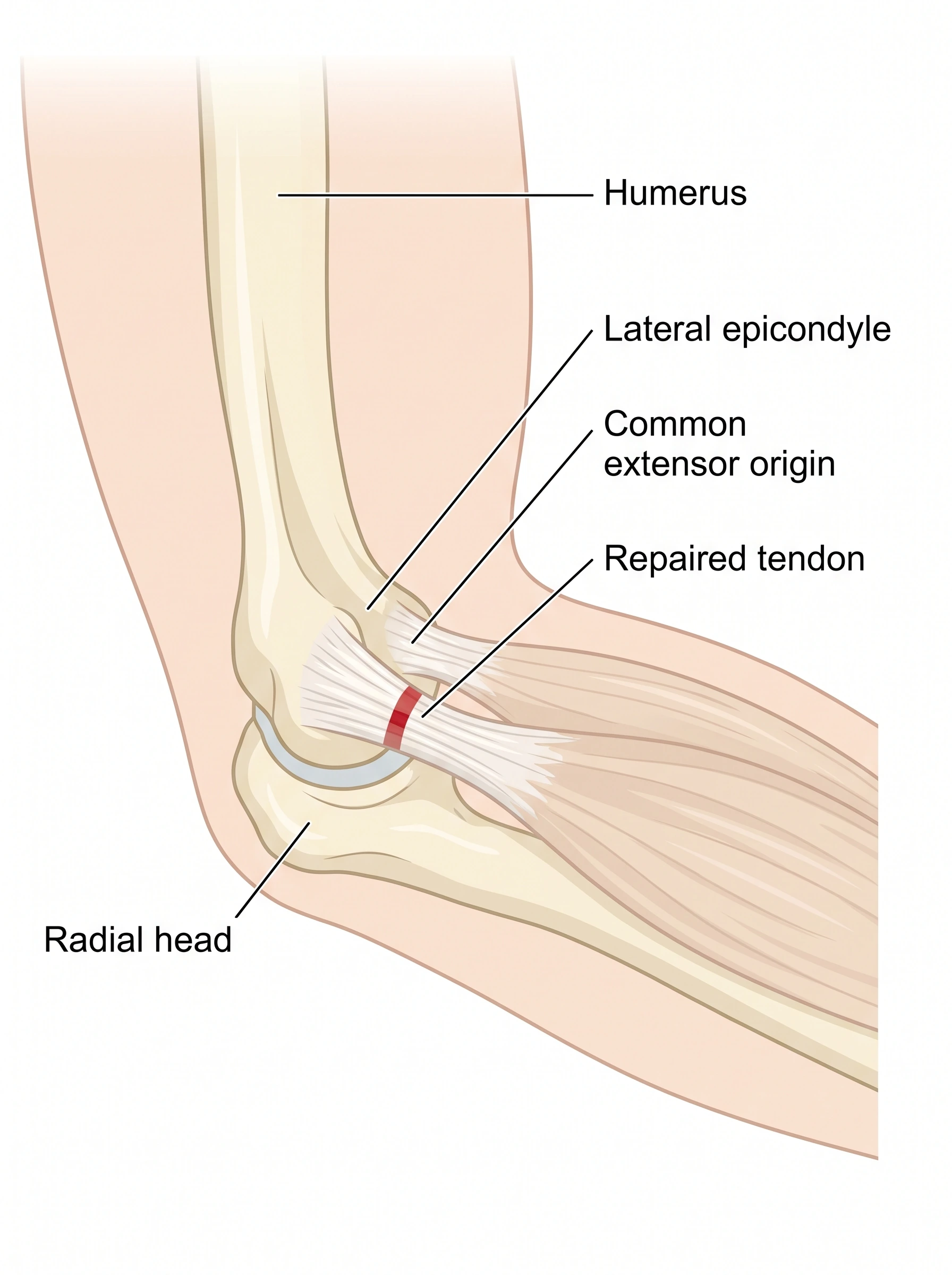
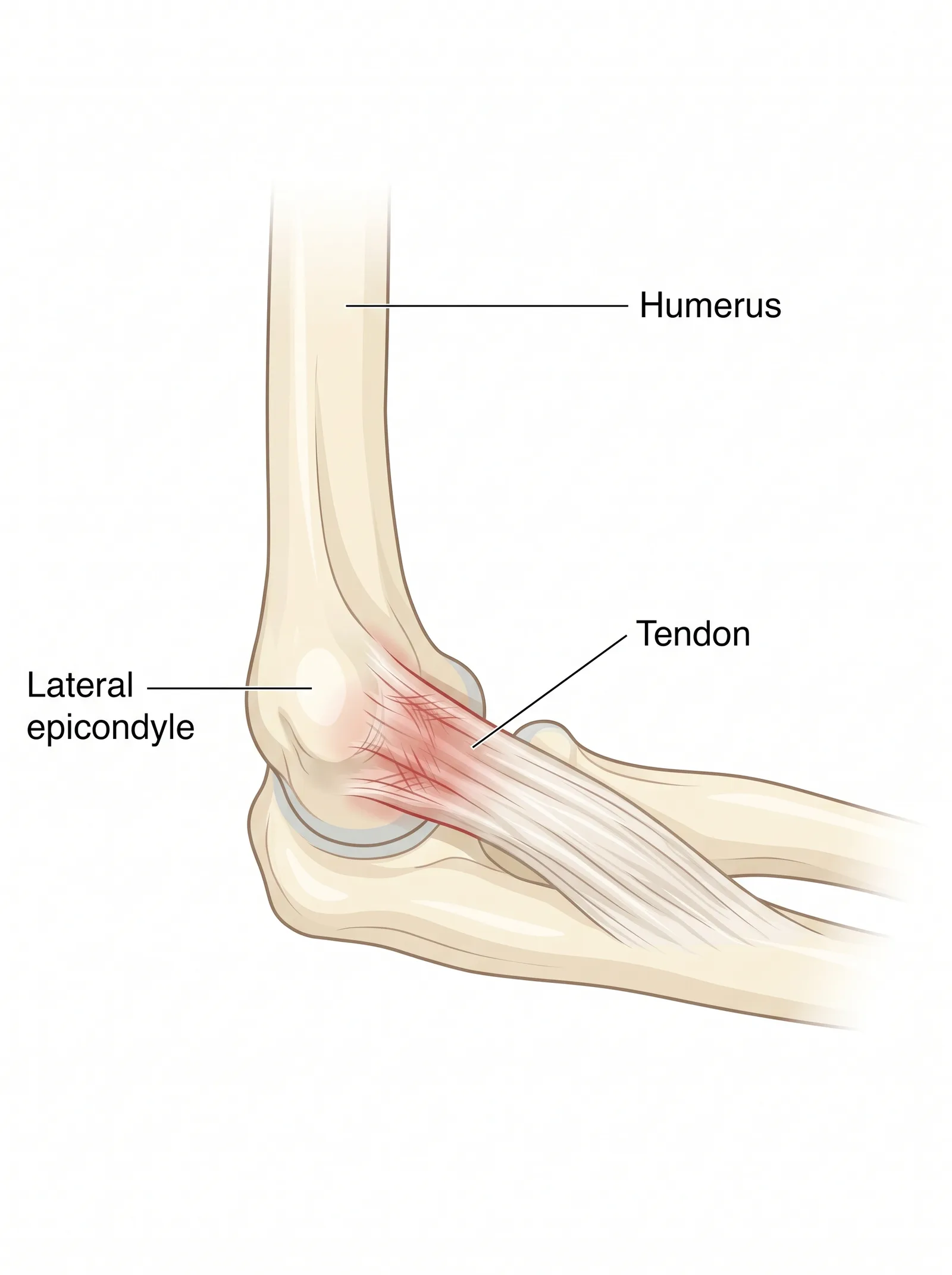
Its medical name is lateral epicondylitis, which points to its location: the lateral epicondyle is the bony bump on the outer elbow. Despite the name, most people with tennis elbow do not play tennis. The condition comes from overuse of the tendons that attach forearm muscles to that bump. Tendons are the strong cords that connect muscle to bone.
The muscles involved are the ones that straighten, or extend, the wrist and fingers. Their shared tendon attaches at the outer elbow. When these muscles are used repeatedly, especially with gripping and lifting, tiny areas of the tendon can become irritated and develop small areas of wear. This is why the condition is now often understood as a wear problem in the tendon rather than simple inflammation, even though the older name suggests swelling. The result is pain and tenderness right where the tendon attaches to the bone.
Tennis elbow often comes from any activity with repeated gripping and wrist motion. Painting, using tools, typing, cooking, and many jobs and hobbies can bring it on, not just racquet sports. It is most common in adults in their forties and fifties. It usually affects one arm, often the dominant one.
The most reassuring fact about tennis elbow is that it usually gets better on its own with time and simple care, even though that time can be frustratingly long. Surgery is needed only in a small number of cases that do not settle after a good, patient trial of non-surgical treatment. For a shorter overview, see our tennis elbow service page, which links back to this full guide.
What are the symptoms of Tennis Elbow, and when should you see a specialist?
The main symptom is pain and tenderness on the outer side of the elbow.
Common patterns include the following.
- Pain at the bony bump on the outer elbow, sometimes spreading down the forearm. - Pain that comes on with gripping, lifting, shaking hands, turning a doorknob, or lifting a coffee cup. - Tenderness when you press on the outer elbow. - A weak or painful grip, so holding or lifting things is harder. - Pain that worsens with activity and eases with rest, at least early on.
Symptoms often build gradually rather than starting with a single injury. Early on, pain comes only with heavy use. Over time, it can come with lighter tasks.
It is reasonable to see a specialist when outer-elbow pain lasts more than a few weeks despite rest, when it limits your work or daily tasks, or when it is not improving on its own. There is rarely an emergency here. Getting checked helps confirm the diagnosis, rule out other causes of elbow pain, and start a plan. If pain follows a specific injury, or if the elbow is swollen, locked, or unstable, mention that, since those point to different problems.
How is Tennis Elbow diagnosed, and what does the visit involve?
Tennis elbow is usually diagnosed by talking and examining, without special tests.
Dr. Levongood will ask where the pain is, what brings it on, how long it has lasted, your work and hobbies, and what you have already tried.
The exam is gentle. Dr. Levongood will press on the outer elbow to find the tender spot, and may ask you to straighten your wrist or fingers against gentle resistance to see if it reproduces your pain. Elbow motion, strength, and stability are checked. The neck and nerves may be checked too, since some elbow and forearm pain comes from a pinched nerve rather than the tendon. This helps be sure the diagnosis is right.
Imaging is not usually needed to diagnose tennis elbow. An X-ray may be ordered to rule out arthritis or other bone causes if the picture is not clear. Ultrasound or MRI is used only in select cases, for example when the diagnosis is uncertain or symptoms have lasted a long time. The office will explain any test and what it shows.
What does treatment for Tennis Elbow involve?
Surgery for tennis elbow is uncommon and is reserved for the small number of people whose pain stays significant despite a long, patient trial of non-surgical care.
The goal is to remove the worn, unhealthy part of the tendon so healthy tissue can heal. Here is the usual sequence.
Before the day. You and Dr. Levongood decide on surgery together, only after non-surgical care has been given a fair, extended trial. The office reviews health, medicines, and blood thinners. Insurance questions are answered by the office.
Anesthesia. Surgery may be done with regional anesthesia, which numbs the arm, sometimes with sedation, or with general anesthesia. The team will discuss what fits you.
Removing the worn tissue. Dr. Levongood reaches the tendon at the outer elbow, identifies the degenerated part, and removes it. Healthy tendon is preserved. The remaining tendon may be repaired or reattached to the bone as needed. This can be done through a small open incision or, in some cases, with an arthroscope, which is a tiny camera used through small incisions. Dr. Levongood will explain which fits you.
Closing. The incision is closed and a splint or dressing is applied. The procedure is usually outpatient, so you go home the same day.
Right after. You rest while the anesthesia wears off. Because the arm is numb, arrange a ride home. Keeping the arm raised helps limit swelling.
What is the recovery timeline for Tennis Elbow?
Recovery is measured by milestones as well as the calendar, and tendon healing takes patience.
The ranges below are typical. According to general guidance from the American Academy of Orthopaedic Surgeons, most people who have surgery for tennis elbow return to activity over several months, with strength continuing to improve for up to a year. These are ranges, not promises.
Week 0 to 2 (protect). The elbow is protected in a splint. You keep the arm raised to limit swelling and move the fingers. The milestone is comfortable early healing.
Week 2 to 6 (motion). The splint often comes off and hand therapy begins to restore elbow and wrist motion gently. You use the hand for light tasks. The milestone is regaining comfortable motion.
Week 6 to 12 (strength). Therapy adds gradual strengthening of the forearm. You return to more daily activities. The milestone is a stronger, less painful grip.
Month 3 to 6 (return to activity). Strength and comfort keep building, and many people return to fuller activity, including gripping and lifting. The milestone is doing previously painful tasks with much less pain.
Month 6 to 12 (full recovery). Grip strength and comfort can keep improving for up to a year. The milestone is a durable, comfortable elbow for your daily needs.
Return to work depends on the job. Light desk work may resume within a week or two. Heavy manual work with gripping and lifting takes longer. The office will plan a realistic return.
How should you prepare for the visit or procedure?
For most people, preparing means preparing for the visit and a course of therapy, not surgery.
If surgery is planned, these steps help.
Prepare for the visit. Note when the pain started, what makes it worse, what you have tried, and how it affects work and daily life. Bring a list of your medicines. This helps Dr. Levongood build a plan.
Transportation (for surgery). Arrange a ride home, since the arm will be numb and splinted.
Home setup (for surgery). Keep daily items within reach and prepare easy-on clothing and simple meals. Set up a spot to rest with the arm raised.
Time off (for surgery). Plan light duty for the first weeks, based on your job. Discuss your work with the office.
Who to have available (for surgery). Have someone available on the first day to drive and help with two-handed tasks.
Health steps. Follow guidance on medicines and blood thinners, and share a full list. Plan to commit to therapy, since it is central to recovery whether or not you have surgery. If you smoke, cutting back supports tendon healing.
Which warning signs should you call about?
For most people managing tennis elbow without surgery, call the office at (404) 847-4180 during if pain suddenly worsens, if the elbow becomes swollen or locks, or if you develop numbness or weakness in the hand, since those may point to another problem.
After surgery, call the office for any of these:
- Fever, spreading redness, warmth, or drainage at the incision, which can signal infection. - Pain that gets worse rather than better after the first days. - A splint that feels too tight, or a hand that is numb, pale, blue, or very cold. - New numbness or tingling in the hand. - A wound that keeps bleeding after gentle pressure.
For a severe or fast-changing problem when you cannot reach the office, seek urgent or emergency care. It is always fine to call and ask.
What results can you expect from Tennis Elbow?
The outlook for tennis elbow is good, and most people never need surgery.
According to general guidance from the American Academy of Orthopaedic Surgeons, the majority of people improve with non-surgical care over time, and among the small number who have surgery, most have good relief of pain. These are ranges, not promises.
Two honest points help set expectations. First, recovery is measured in weeks to months, not days, whether or not surgery is involved, because tendons heal slowly. Sticking with therapy is the single most important thing most people can do. Second, surgery is a last resort, not a first choice, and it is reserved for pain that stays significant after a long, patient trial of simpler care. Dr. Levongood will talk with you about the likely course for your elbow and help you avoid both giving up too early and rushing to surgery.
What are the treatment options?
- 01Relative rest and activity changesCutting back on the gripping and lifting that trigger pain lets the tendon calm down. This does not mean total rest; it means avoiding the specific movements that hurt and changing how you do tasks.
- 02Hand and physical therapyThis is a cornerstone of treatment. A therapist teaches specific exercises, including controlled strengthening of the forearm muscles, that help the tendon recover and become more durable. Stretching and technique changes are added. Therapy takes weeks to work, and sticking with it matters.
- 03BracingA counterforce brace, a strap worn on the upper forearm, can take some load off the tendon attachment during activity. A wrist splint is sometimes used to rest the muscles.
- 04Ice and anti-inflammatory medicineIce after activity and over-the-counter medicine that lowers pain can ease symptoms during flares. Confirm with the office or your regular doctor that any medicine fits your health.
- 05InjectionsVarious injections are sometimes used for stubborn cases. Their role is limited and debated, and Dr. Levongood will discuss whether one makes sense for you rather than using it routinely.
What do patients ask most?
Do I have to play tennis to get tennis elbow?+
How long until it gets better?+
Will I need surgery?+
Do injections cure it?+
Can I keep working and exercising?+
Fellowship trained at The Hughston Clinic (Sports Medicine). Sees patients in Lawrenceville.
About Dr. Levongood →