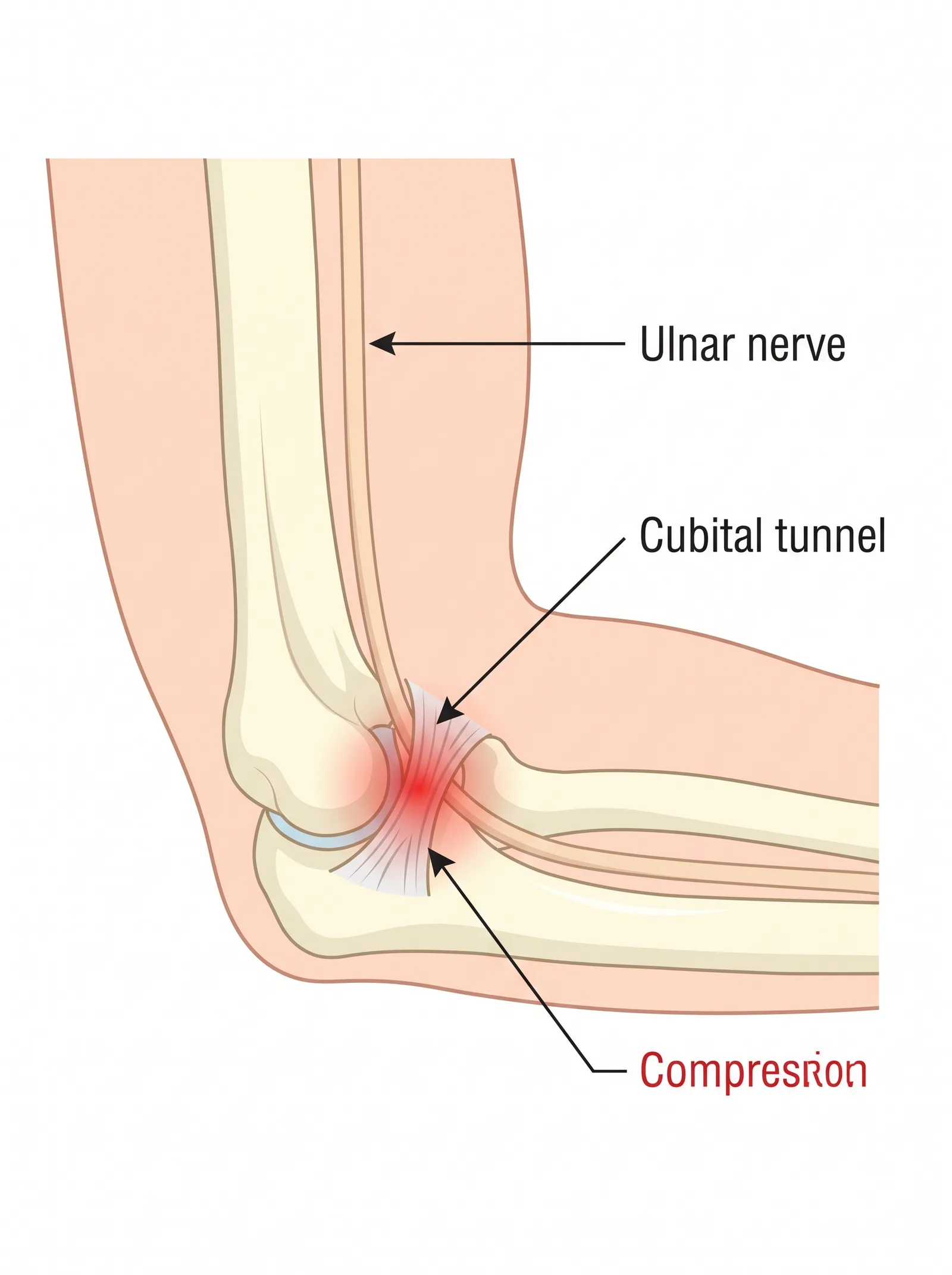
Cubital tunnel syndrome happens when the ulnar nerve, the nerve behind the elbow that gives the "funny bone" feeling, gets squeezed. This can cause numbness and weakness in the hand. Cubital tunnel release is surgery that takes pressure off the nerve. These are ranges, not promises.
Gary Levongood performs cubital tunnel release in Lawrenceville when it is the right step, and reviews every alternative with you first.
What is Cubital Tunnel Release?
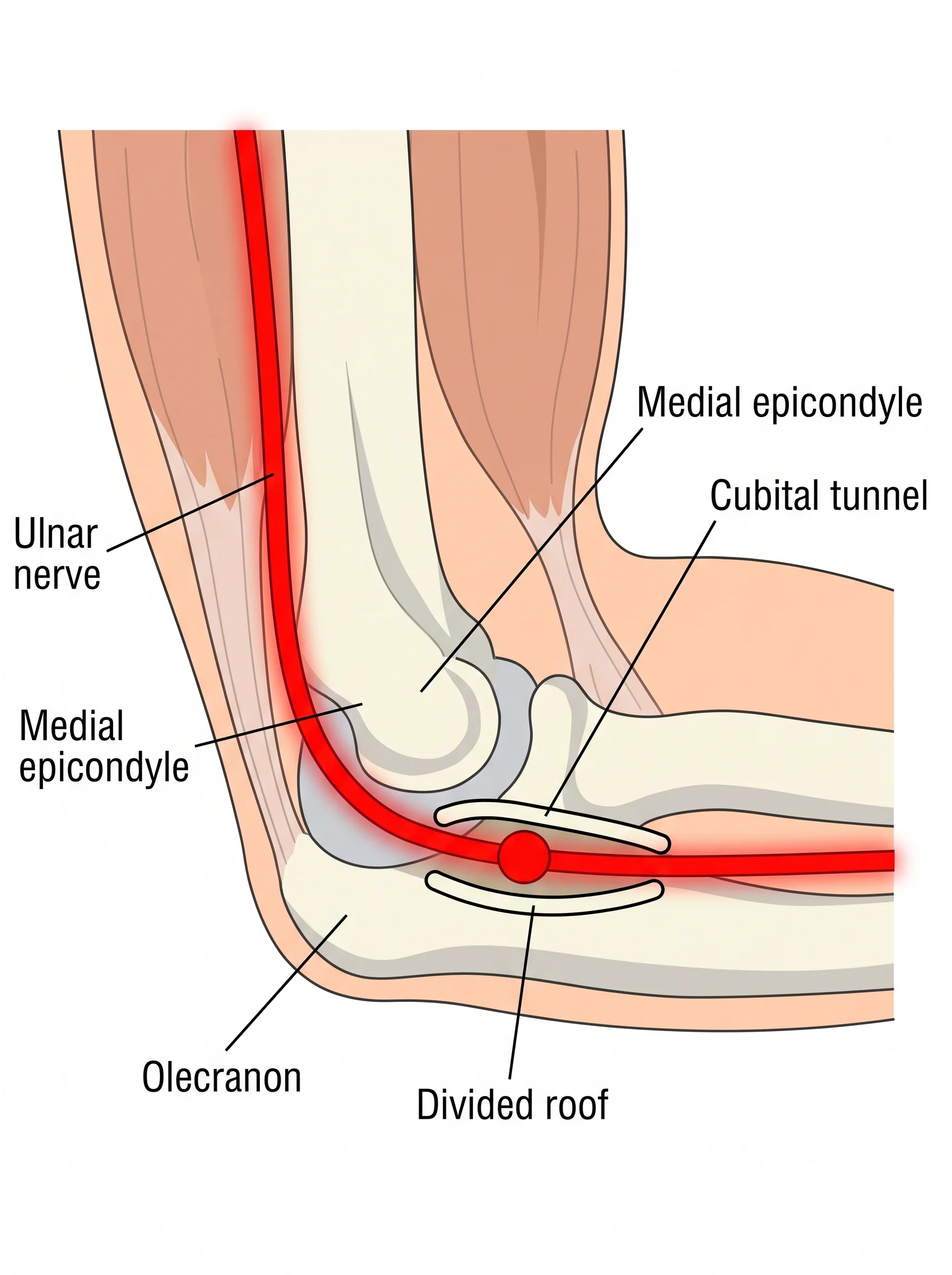
The ulnar nerve runs from the neck down the arm and passes behind the inside of the elbow, through a narrow path called the cubital tunnel.
That spot is where you feel the tingle when you bump your "funny bone." Because the nerve sits so close to the surface there, and because bending the elbow stretches and tightens the tunnel, the nerve can get pinched.
Cubital tunnel syndrome is the name for the numbness, tingling, and weakness that come from pressure on the ulnar nerve at the elbow. It is the second most common nerve compression in the arm, after carpal tunnel syndrome at the wrist. The ulnar nerve serves feeling to the little finger and half of the ring finger, and it powers many of the small muscles that let the hand pinch and grip with control.
Cubital tunnel release is surgery that relieves the pressure on the nerve. It is considered when symptoms are constant, when the hand is losing strength or muscle, or when nonsurgical care has not helped. The goal of surgery is to stop the nerve from getting worse and to give it room to recover, though how much feeling and strength come back depends on how long and how tightly the nerve was compressed.
This page walks through the symptoms, the diagnosis, nonsurgical and surgical care, and recovery. It pairs with our shorter cubital tunnel release service page. You can start with either.
What are the symptoms of Cubital Tunnel Release, and when should you see a specialist?
The classic symptom is numbness and tingling in the little finger and the ring finger.
Many people first notice it at night or when the elbow is bent for a while, such as while holding a phone, driving, or sleeping with the arm curled up.
Other common symptoms include:
- A pins-and-needles feeling in the little-finger side of the hand. - Aching on the inside of the elbow. - A weaker grip, or trouble with fine tasks such as buttoning a shirt, typing, or opening a jar. - Dropping things or a clumsy feeling in the hand. - In longer-standing cases, thinning of the muscles between the thumb and fingers, and fingers that begin to curl.
It is time to see a hand and upper-limb specialist when the numbness becomes frequent or constant, when the hand feels weak, or when you notice any muscle wasting. Muscle thinning and a hand that will not fully straighten are signs the nerve has been squeezed a long time, and getting care sooner gives the nerve a better chance. A specialist can tell cubital tunnel syndrome apart from a pinched nerve in the neck or other problems that can feel similar.
How is Cubital Tunnel Release diagnosed, and what does the visit involve?
The visit starts with your history.
The specialist will ask where the numbness is, when it happens, and whether the hand feels weak. Numbness limited to the little finger and half the ring finger is a strong clue that points to the ulnar nerve.
During the exam, the specialist checks feeling in the fingers and tests the strength of the small hand muscles. A common test is to tap over the nerve behind the elbow; a tingle down to the little finger, called a Tinel sign, suggests the nerve is irritated. The doctor may also bend your elbow fully and hold it to see if symptoms build, since this stretches the tunnel.
Two tests often confirm the diagnosis and show how much the nerve is affected. Nerve conduction studies measure how fast signals travel along the nerve, and electromyography, often called EMG, checks how the muscles respond. Together these tell the specialist where the nerve is pinched and how severe it is. X-rays may be taken if an old injury or arthritis at the elbow could be crowding the nerve.
Bring a list of your symptoms and when they happen, and mention any old elbow injuries. The clearer the picture you give, the more useful the visit.
Wondering whether your hand numbness is the ulnar nerve? Dr. Levongood can evaluate it. Call (404) 847-4180 or use the request form.
What happens during Cubital Tunnel Release, step by step?
Cubital tunnel release comes in a few forms.
The surgeon chooses based on the exam, the nerve studies, and what is crowding the nerve. Here is the general sequence.
Anesthesia. You will get either a regional block that numbs the arm, or general anesthesia. The anesthesia team will help you choose.
The incision. The surgeon makes an incision along the inside of the elbow. The length depends on the technique.
Freeing the nerve (in situ release). In the simplest version, the surgeon opens the roof of the cubital tunnel so the nerve has more room where it was being pinched. The nerve is left in its normal spot. This is called in situ decompression.
Moving the nerve (transposition), if needed. If the nerve slips or snaps over the bony bump when the elbow bends, or if the tunnel is too tight, the surgeon may move the nerve to the front of the elbow so it no longer catches. This is called transposition. The nerve can be placed under the skin, within the muscle, or beneath the muscle, depending on the case.
Trimming the bump (medial epicondylectomy), if needed. In some cases the surgeon removes a small part of the bony bump so the nerve sits more comfortably.
Closing. The incision is closed with stitches, and a soft dressing or a splint is applied. Which technique is used shapes the recovery, so your surgeon will tell you which one was done.
Cubital tunnel release is usually outpatient, meaning you go home the same day.
What is the recovery timeline for Cubital Tunnel Release?
Recovery has two parts: the incision healing, which is fairly quick, and the nerve recovering, which is slower and harder to predict.
It helps to measure progress by what you can do. According to general guidance from the American Academy of Orthopaedic Surgeons, nerve symptoms can keep improving for many months after surgery, and full nerve recovery may take a year or more when the compression was long-standing. These are ranges, not promises.
Milestones by what you can do:
- Early healing (first 2 to 3 weeks). The dressing or splint protects the incision. With a simple in situ release, you can often move the elbow gently soon after; with a transposition, the elbow may be splinted longer. The milestone is a healing incision and comfortable finger and shoulder motion. - Motion and light use (weeks 3 to 6). Stitches come out and, with the surgeon's clearance, you begin using the arm for light tasks. A therapist may guide elbow motion. The milestone is easy, comfortable elbow bending and straightening. - Strengthening (weeks 6 to 12). As the incision fully heals, therapy adds strengthening. The milestone is a grip and pinch that feel steadier. - Nerve recovery (months 3 to 12 and beyond). Numbness and weakness fade slowly as the nerve heals. The milestone is steadily returning feeling and strength; some improvement can continue past a year.
Desk work often resumes within a week or two, while heavy or repetitive arm work takes longer, especially after a transposition. Feeling that returns first at the base of the little finger and moves outward is a good sign the nerve is recovering. Your surgeon clears each stage based on how you are doing.
Read the full guide to preparing for surgery →
Your own recovery instructions come from the office and are specific to you. This page describes the general course, not a plan to follow.
How should you prepare for Cubital Tunnel Release?
Planning ahead smooths the first weeks, especially since your dominant arm may be the one treated.
Home setup. Keep daily items within easy reach so you avoid heavy lifting with the healing arm. Prepare simple meals in advance. Loose clothing is easier to manage than tight sleeves over a dressing or splint.
Transportation. You cannot drive yourself home after anesthesia, so arrange a ride for surgery day. Return to driving depends on the technique, your pain, and whether you can safely control the wheel, so ask your surgeon when it is safe.
Time off. Desk work may resume within a week or two; hands-on or heavy work takes longer, particularly after a transposition. Ask the office for a work note if you need one.
Who to have available. Have someone help for the first day or two with meals, dressing, and errands. If the treated arm is your dominant one, plan for extra help with daily tasks.
Health steps. Share your full medicine and supplement list with the office, since some, such as blood thinners, may need adjusting. If you smoke, know that not smoking supports nerve and wound healing. Follow the fasting instructions for the night before surgery.
Which warning signs should you call about?
Call the office of Gary Levongood at (404) 847-4180 if you notice any of these after surgery.
- Fever, chills, or spreading redness around the incision, which can signal infection. - Drainage that becomes thick, cloudy, or foul-smelling, or an incision that opens. - Pain that keeps getting worse rather than easing, or pain your prescribed plan does not control. - Sudden new numbness, weakness, or a hand that turns pale or cold. - A splint or dressing that feels far too tight, or fingers that will not move. - Calf pain, chest pain, or trouble breathing, which need emergency care right away.
For an emergency, call your local emergency number rather than the office. For wound and pain questions during office hours, the office team is your first call, and they can tell you who to reach after hours.
What results can you expect from Cubital Tunnel Release?
Most people who have cubital tunnel release get relief from the aching and stop the nerve from getting worse.
According to general guidance from the American Academy of Orthopaedic Surgeons, many patients improve after surgery, though recovery of feeling and strength is often gradual and may be incomplete when the nerve was compressed for a long time. These are ranges, not promises.
A few honest points:
- Pain and tingling often ease first, while full return of feeling and strength is slower and can take a year or more. - When surgery is done before the hand muscles thin, more strength tends to come back. Long-standing compression with muscle wasting may leave some lasting weakness. - The simpler in situ release and the transposition techniques both help many patients; your surgeon picks the one that fits your nerve.
Risks include infection, a tender scar, stiffness, and the chance that some numbness or weakness remains. In a small number of cases, symptoms come back or the nerve stays irritated. Your surgeon will review the risks for your case and answer your questions before you decide. Any numbers you read online come from mixed groups and may not match your situation, so lean on the conversation with your surgeon.
What do patients ask most?
Why does my little finger go numb when I bend my elbow?+
Will surgery bring back all my feeling and strength?+
How long until I can use my arm normally?+
Will the nerve be moved during surgery?+
Can this come back after surgery?+
How do I handle the cost and insurance?+
What are the treatment options?
- 01Activity changesCutting back on long stretches with the elbow bent, and avoiding leaning on the elbow, takes direct pressure off the nerve.
- 02Night splintingA splint that keeps the elbow gently straight during sleep is one of the most helpful steps, since many people sleep with the elbow curled.
- 03An elbow padA soft pad over the inside of the elbow guards the nerve during the day and reminds you not to lean on it.
- 04Anti-inflammatory medicineOver-the-counter medicine may ease elbow aching. Check with the office first, as it is not right for everyone.
- 05Hand therapyA therapist can teach nerve gliding exercises and habits that keep pressure off the nerve.
Fellowship trained at The Hughston Clinic (Sports Medicine). Sees patients in Lawrenceville.
About Dr. Levongood →