Elbow arthroscopy is surgery that uses a small camera and thin tools placed through tiny openings to look inside and treat problems in the elbow joint. It can remove loose fragments, clean out damaged tissue, and free up a stiff joint. These are ranges, not promises.
Gary Levongood performs elbow arthroscopy in Lawrenceville when it is the right step, and reviews every alternative with you first.
What is Elbow Arthroscopy?
Arthroscopy is a way of doing surgery inside a joint through small openings instead of one large cut.
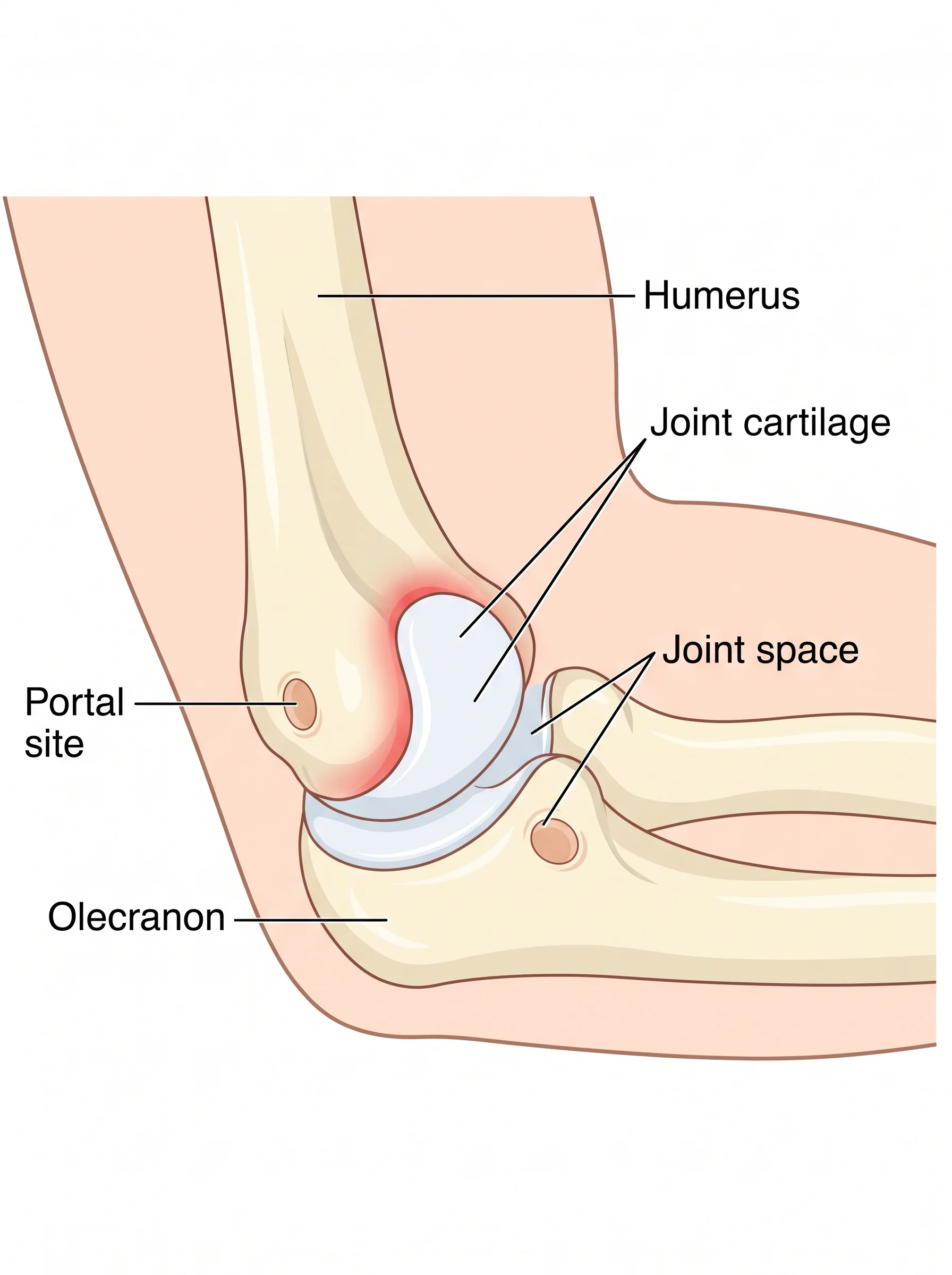
The word comes from "arthro," meaning joint, and "scope," meaning to look. In elbow arthroscopy, the surgeon places a thin camera, called an arthroscope, into the elbow and views the inside of the joint on a screen. Thin tools go through other small openings to do the work.
The elbow is a hinge joint where three bones meet, and it is lined with cartilage, the smooth surface that lets bones glide. Several problems inside the elbow can be treated with arthroscopy, rather than one specific disease. Common reasons include removing loose pieces of cartilage or bone that float in the joint and cause catching, cleaning out damaged or inflamed tissue, smoothing rough cartilage, and releasing scar tissue or bone spurs that make the elbow stiff. It is also used to treat certain forms of arthritis and some sports injuries of the elbow.
Because the openings are small, arthroscopy often means less disruption to the tissues around the joint than open surgery, though it is still surgery with real recovery. Elbow arthroscopy is considered when a specific problem inside the joint is causing pain, catching, or stiffness, and when nonsurgical care has not brought enough relief. What the surgeon does during the procedure depends on what the problem is.
This page explains when elbow arthroscopy is used, how the elbow is evaluated, nonsurgical and surgical care, and recovery. It pairs with our shorter elbow arthroscopy service page. You can read either first.
What are the symptoms of Elbow Arthroscopy, and when should you see a specialist?
Because elbow arthroscopy treats several different problems, the symptoms that lead to it vary.
They usually center on pain, catching, or stiffness in the elbow.
Common symptoms include:
- Elbow pain that lingers and limits daily tasks or sports. - A catching, locking, or grinding feeling, which can point to a loose fragment in the joint. - Stiffness, meaning trouble fully straightening or bending the elbow. - Swelling in the joint that comes and goes. - A sense that the elbow gets stuck at certain angles.
Consider seeing a specialist when elbow pain lasts more than a few weeks, when the joint catches or locks, or when stiffness keeps you from straightening or bending the arm. See a doctor sooner if the elbow locks and will not move, if it swells after an injury, or if pain is severe. A hand and upper-limb specialist can find the cause, which is important because the right treatment depends on the specific problem, and not every elbow problem is helped by arthroscopy.
How is Elbow Arthroscopy diagnosed, and what does the visit involve?
Because arthroscopy addresses a range of problems, the visit focuses on pinning down exactly what is wrong inside the elbow.
The specialist will ask about your pain, catching, or stiffness, and about any injury or activity that may have caused it.
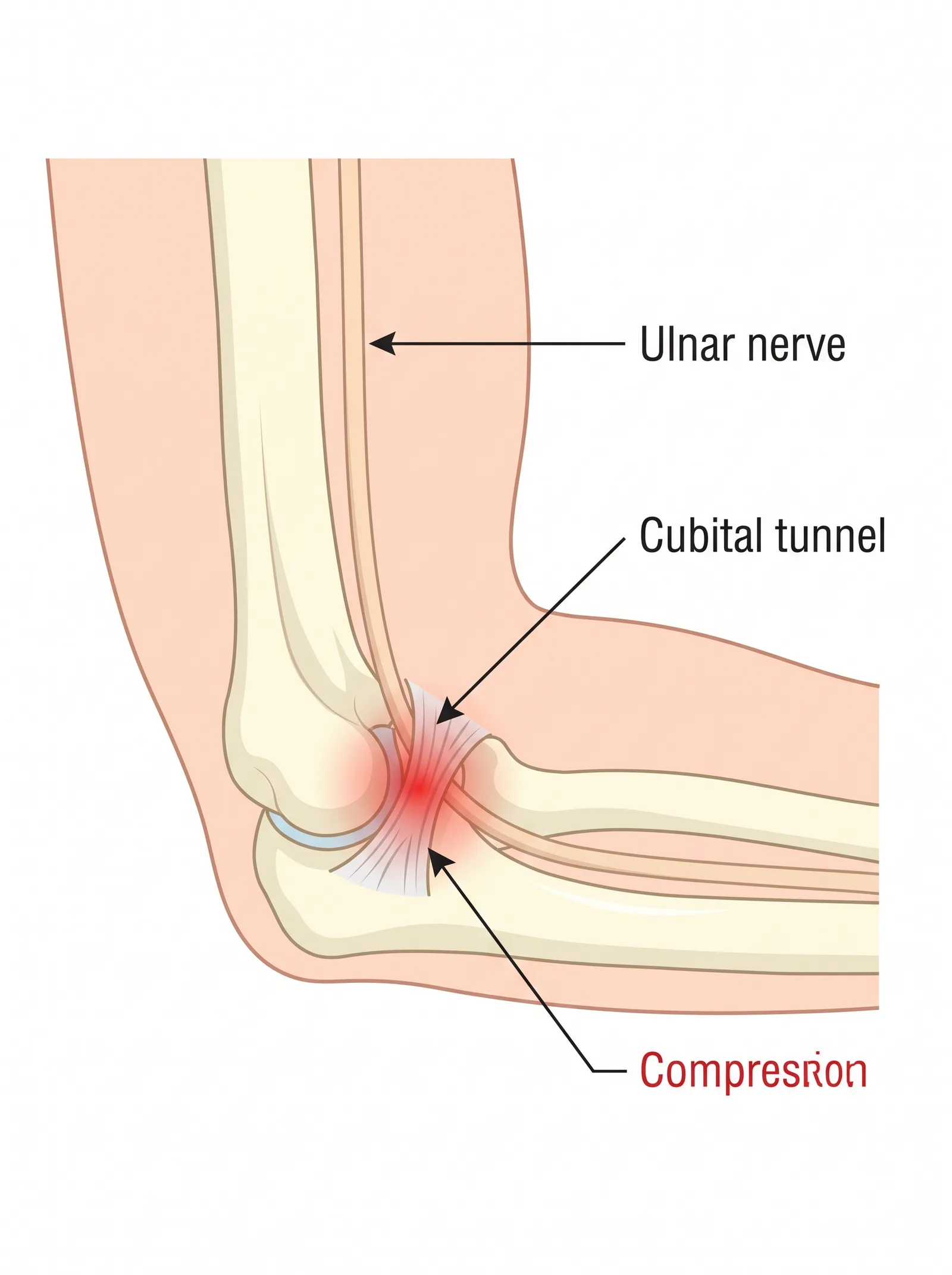
On exam, the specialist moves the elbow through its range to see how far it bends and straightens and to feel for catching or grinding. They press around the joint to find tender spots and check the stability of the elbow. They also check the nearby nerves, since some run close to the joint and their location matters for planning surgery.
Imaging is important here. X-rays show the bones and can reveal loose fragments, bone spurs, or arthritis. A CT scan, a detailed bone scan, gives a clearer view of bone spurs and loose pieces. An MRI, which shows soft tissue, can show cartilage, tendons, and ligaments. Together, these help the surgeon decide whether arthroscopy is the right tool and plan exactly what to do inside the joint.
Bring any prior imaging and a clear description of when the elbow catches, locks, or hurts. That detail guides the plan.
Is your elbow catching, locking, or stiff? Dr. Levongood can find out why. Call (404) 847-4180 or use the request form.
What happens during Elbow Arthroscopy, step by step?
Because elbow arthroscopy treats different problems, the exact steps vary.
Here is the general sequence, with the treatment step tailored to what is found.
Anesthesia. You will get either a regional block that numbs the arm, or general anesthesia. The team will help you choose. Positioning of the arm is set up carefully for a clear view.
Making the openings. The surgeon makes several small openings, called portals, around the elbow, each about the width of a pencil. The surgeon takes care to place them away from the nearby nerves.
Looking inside. The camera goes into the joint, and fluid gently expands the space so the surgeon can see. On a screen, the surgeon inspects the cartilage, the joint lining, and the bones for the problem seen on imaging.
Treating the problem. This step depends on what is found. The surgeon may remove loose fragments of bone or cartilage, trim away damaged or inflamed tissue, smooth rough cartilage, shave down bone spurs, or release scar tissue and tight tissue to free a stiff joint. Thin tools passed through the portals do this work.
Closing. The fluid is drained, the small openings are closed with a stitch or two or adhesive strips, and a dressing is applied. A splint may be used in some cases. Because the treatment step varies, your surgeon will explain exactly what was done in your elbow.
Elbow arthroscopy is usually outpatient, meaning you go home the same day.
What is the recovery timeline for Elbow Arthroscopy?
Recovery depends heavily on what was done inside the joint.
A simple removal of a loose fragment recovers faster than a release for a very stiff elbow. Progress is best judged by what the elbow can do. According to general guidance from the American Academy of Orthopaedic Surgeons, recovery after elbow arthroscopy varies with the procedure, ranging from a few weeks for simple cases to several months for more involved ones. These are ranges, not promises.
Milestones by what you can do:
- Early healing (first 1 to 2 weeks). The small openings heal and swelling drops. For many cases, early gentle motion is encouraged, sometimes right away, to prevent stiffness. The milestone is healing portals and returning comfortable motion. - Motion phase (weeks 2 to 6). With the surgeon's guidance, a therapist helps you regain full bending and straightening. For stiffness releases, keeping the motion you gained in surgery is a key goal. The milestone is smooth, improving elbow motion. - Strengthening phase (weeks 6 to 12). As the joint settles, therapy adds strengthening. The milestone is a steadier, stronger elbow that handles daily loads. - Return to full activity (varies by case). Simple cases may return to most activity within weeks, while more involved procedures and sports take a few months. The milestone is doing your usual activities without pain, catching, or a stuck feeling.
For stiffness surgery, therapy soon after the procedure is especially important to hold onto the motion gained during surgery. Light desk work often resumes within a week or two. Your surgeon and therapist set the pace based on what was done and how you are healing.
Read the full guide to preparing for surgery →
Your own recovery instructions come from the office and are specific to you. This page describes the general course, not a plan to follow.
How should you prepare for Elbow Arthroscopy?
Preparation depends somewhat on the procedure, but these steps help in most cases.
Home setup. Keep daily items within easy reach so you avoid heavy lifting with the treated arm early on. Prepare simple meals ahead. Loose clothing is easier over a dressing or splint.
Transportation. You cannot drive yourself home after anesthesia, so arrange a ride for surgery day. Return to driving depends on your pain, any splint, and whether you can safely control the wheel, so ask your surgeon when it is safe.
Time off. Desk work may resume within a week or two; hands-on work takes longer and depends on what was done. Ask the office for a work note if you need one.
Who to have available. Have someone help for the first day or two with meals, dressing, and errands. If the treated arm is your dominant one, plan for extra help.
Health steps. Give the office your full medicine and supplement list, since some, such as blood thinners, may need adjusting. If you smoke, know that not smoking supports healing. Follow the fasting instructions for the night before surgery. If therapy will start soon after surgery, especially for a stiff elbow, ask the office to help you arrange it ahead of time.
Which warning signs should you call about?
Call the office of Gary Levongood at (404) 847-4180 if you notice any of these after surgery.
- Fever, chills, or spreading redness around the openings, which can signal infection. - Drainage that turns thick, cloudy, or foul-smelling, or an opening that will not close. - Pain that keeps getting worse rather than easing, or pain your prescribed plan does not control. - New or worsening numbness, tingling, or weakness in the hand or forearm, since nerves run near the elbow. - A hand or fingers that turn pale, blue, or cold, or a splint or dressing that feels far too tight. - Calf pain, chest pain, or trouble breathing, which need emergency care right away.
For an emergency, call your local emergency number rather than the office. For wound and pain questions during office hours, the office team is your first call, and they can tell you who to reach after hours.
What results can you expect from Elbow Arthroscopy?
Because elbow arthroscopy treats different problems, outcomes vary by what was done, but most people get relief from the pain, catching, or stiffness that led to surgery.
According to general guidance from the American Academy of Orthopaedic Surgeons, arthroscopic treatment helps many patients with loose fragments, damaged tissue, and stiffness improve their symptoms and motion. These are ranges, not promises.
A few honest points:
- Removing a loose fragment that causes catching often brings quick, clear relief. - Releasing a very stiff elbow can improve motion, but keeping that motion depends heavily on doing your therapy afterward. - Arthritis and cartilage wear may improve with cleanup, but arthroscopy does not undo the underlying wear, so some symptoms can remain or return over time.
Risks include infection, stiffness, and nerve irritation, which deserves special mention because several nerves run close to the elbow joint. Your surgeon takes care to protect them, but temporary or, rarely, lasting nerve symptoms can occur. Your surgeon will review the risks that apply to your specific procedure before you decide. Any numbers you read online come from mixed groups having different procedures and may not match your case, so rely on the conversation with your surgeon.
What do patients ask most?
What problems can elbow arthroscopy fix?+
Is arthroscopy less involved than open surgery?+
How long is recovery?+
Why is therapy so important after surgery for a stiff elbow?+
Are the nerves at risk during elbow arthroscopy?+
What about cost and insurance?+
What are the treatment options?
- 01Activity change and restEasing off the motions that aggravate the elbow gives the joint a chance to settle.
- 02Anti-inflammatory medicineOver-the-counter medicine can lower pain and swelling. Check with the office first, as it is not right for everyone.
- 03Physical or hand therapyA therapist guides exercises to restore motion, especially for stiffness, and to strengthen the muscles that support the elbow.
- 04A steroid injectionIn some cases, a shot of anti-inflammatory medicine into the joint can lower pain and swelling.
- 05Bracing or splintingIn certain cases, a brace supports the joint or helps stretch out a stiff elbow over time.
Fellowship trained at The Hughston Clinic (Sports Medicine). Sees patients in Lawrenceville.
About Dr. Levongood →