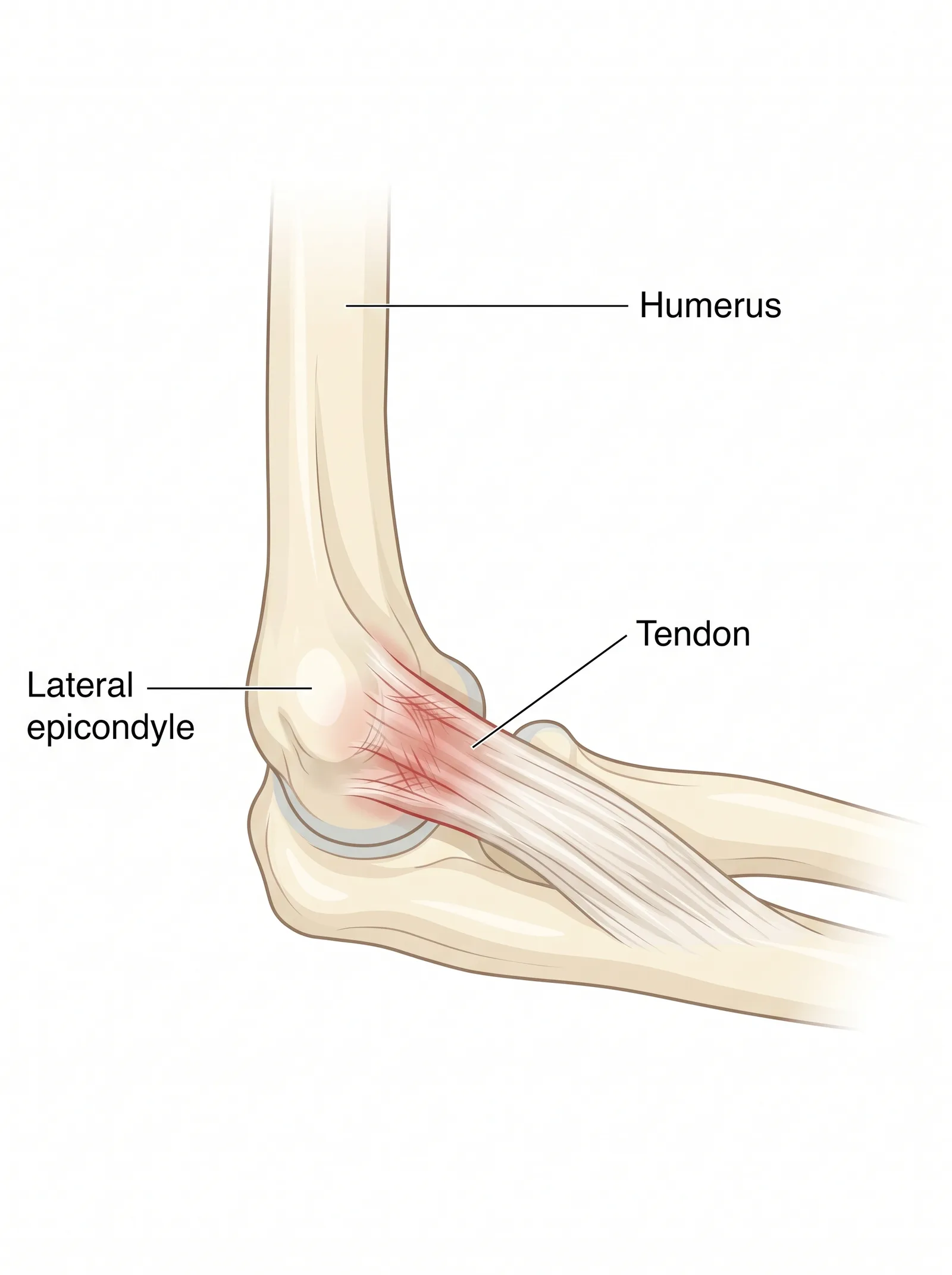
Tennis elbow, or lateral epicondylitis, is pain on the outside of the elbow from strained tendons that attach forearm muscles to the bone. Most cases heal without surgery. Tennis elbow release is surgery that removes the damaged tendon tissue when other care has not worked. These are ranges, not promises.
Gary Levongood performs tennis elbow release in Lawrenceville when it is the right step, and reviews every alternative with you first.
What is Tennis Elbow Release?
Tennis elbow is pain on the outer side of the elbow.
Its medical name is lateral epicondylitis, and it involves the tendons, the tough cords that connect muscle to bone, where the forearm muscles that lift the wrist attach to a bony bump on the outside of the elbow. Despite the name, most people who get it do not play tennis. It usually comes from repeated gripping, lifting, and wrist motion at work or in hobbies.
Over time, small strains build up in the tendon and the tissue does not heal well. Under a microscope, the problem is more wear and failed healing than active swelling, which is why care focuses on helping the tendon recover rather than just calming inflammation. The condition is common in adults between about 30 and 50 years old.
The good news is that tennis elbow usually gets better on its own with time and nonsurgical care. Most people never need surgery. Tennis elbow release is considered only after a long, honest trial of nonsurgical care, usually many months, has not brought enough relief. Surgery removes the small area of damaged tendon so healthier tissue can take over.
This page covers the symptoms, how it is diagnosed, the many nonsurgical options, what surgery involves, and recovery. It pairs with our shorter tennis elbow release service page. You can read either one first.
What are the symptoms of Tennis Elbow Release, and when should you see a specialist?
The main symptom is pain and tenderness on the outside of the elbow, right over the bony bump.
The pain may spread down the forearm. It often builds gradually rather than starting with one injury.
Common symptoms include:
- Pain when you grip, lift, or twist, such as shaking hands, turning a key, or holding a coffee cup. - Tenderness when you press on the outer elbow. - A weaker grip, or pain that makes gripping hard. - Pain when you straighten your fingers or bend your wrist back against resistance. - An ache that lingers after activity, sometimes into the evening.
Consider seeing a specialist when outer-elbow pain lasts more than a few weeks, when it interferes with work or daily tasks, or when home measures are not helping. See a doctor sooner if the elbow is swollen, locks, or gives way, or if pain follows a fall, since those point to other problems. A hand and upper-limb specialist can confirm tennis elbow and rule out nerve or joint causes that can feel similar.
How is Tennis Elbow Release diagnosed, and what does the visit involve?
Diagnosis is usually made from your story and a physical exam, without needing many tests.
The specialist will ask how the pain started, what makes it worse, and what work or hobbies stress your forearm.
On exam, the specialist presses over the bony bump on the outer elbow to find the tender spot. They will likely ask you to straighten your wrist or fingers against gentle resistance; pain at the outer elbow during that test supports the diagnosis. The doctor also checks your neck, shoulder, and the rest of the elbow to make sure the pain is not coming from somewhere else.
Imaging is often not needed. X-rays may be taken to look at the joint and rule out arthritis or a bone problem. In cases that do not improve as expected, an ultrasound or MRI, scans that show soft tissue, can show the state of the tendon. Nerve tests may be added if a pinched nerve could be causing similar pain.
Come to the visit ready to describe your daily activities and the motions that hurt. That information shapes both the diagnosis and the plan.
Outer-elbow pain that will not quit? Dr. Levongood can take a look. Call (404) 847-4180 or use the request form.
What happens during Tennis Elbow Release, step by step?
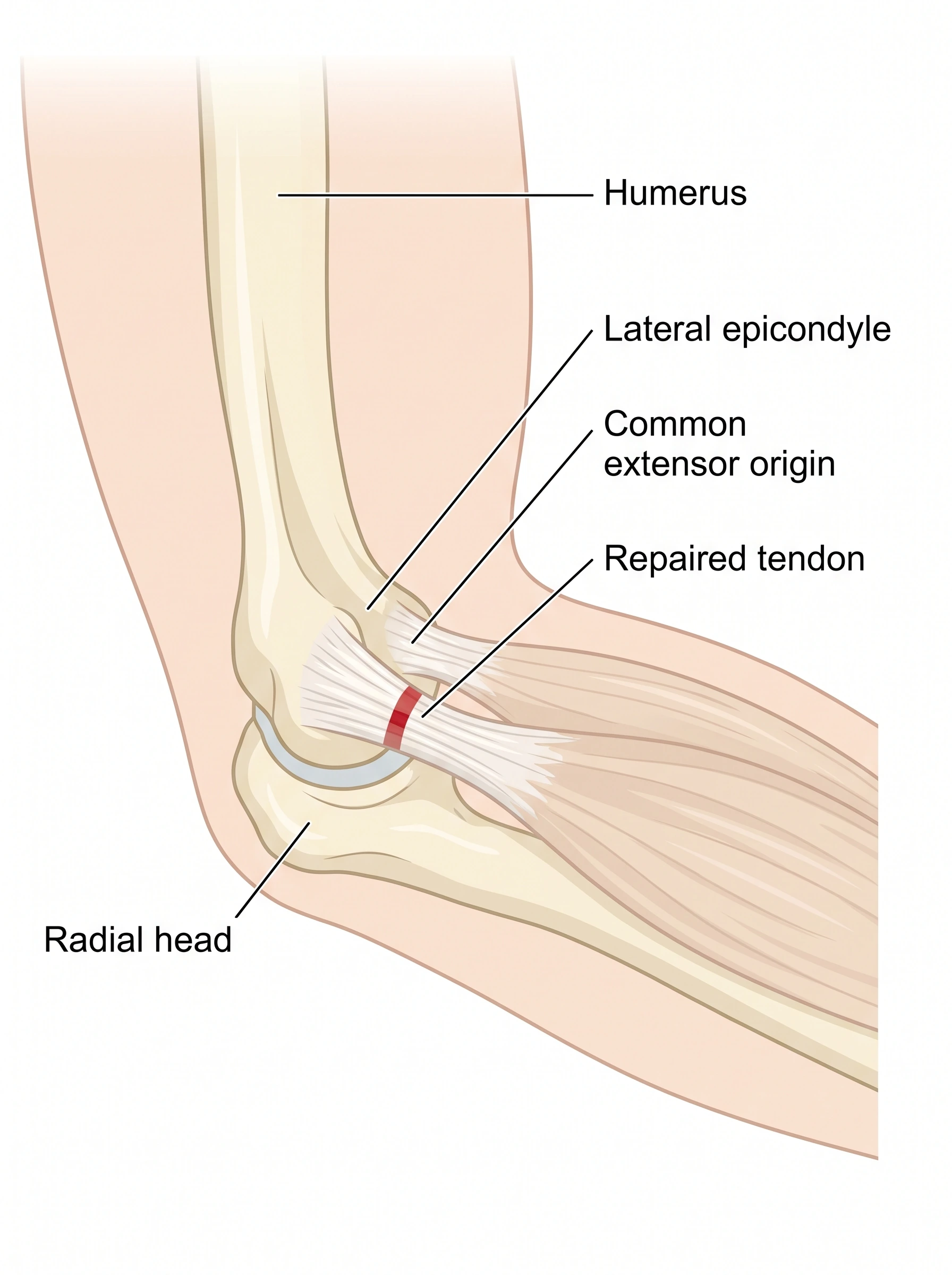
Tennis elbow release removes the damaged part of the tendon so healthier tissue can heal in.
It can be done open, with a small incision, or with arthroscopy, using a camera. Here is the general sequence.
Anesthesia. You will get either a regional block that numbs the arm, or general anesthesia. The team will help you decide.
The incision or openings. For an open release, the surgeon makes a small incision over the outer elbow. For an arthroscopic release, the surgeon uses one or more small openings and a camera.
Finding the damaged tissue. The surgeon identifies the worn, unhealthy part of the tendon where it attaches to the bony bump. This tissue looks different from healthy tendon.
Removing the bad tissue (debridement). The surgeon trims away the damaged tendon. Removing it lets the body lay down healthier tissue in its place.
Preparing the bone, if needed. The surgeon may lightly roughen or drill small holes in the bump to bring in blood flow that helps the tendon reattach and heal. In some cases the healthy tendon is stitched back down.
Closing. The incision or openings are closed with stitches, and a dressing or splint is applied. Because the exact steps depend on what the surgeon finds, your surgeon will describe what was done in your case.
Tennis elbow release is usually outpatient, meaning you go home the same day.
What is the recovery timeline for Tennis Elbow Release?
Recovery is gradual, and it is best judged by what the elbow can do.
According to general guidance from the American Academy of Orthopaedic Surgeons, many people return to activity within a few months after tennis elbow surgery, with grip strength continuing to improve for up to about six months or longer. These are ranges, not promises.
Milestones by what you can do:
- Early healing (first 1 to 2 weeks). A splint or dressing protects the elbow, and you keep the incision clean and dry. The milestone is a healing incision and comfortable finger, wrist, and shoulder motion. - Motion phase (weeks 2 to 6). Stitches come out and, with the surgeon's clearance, a therapist guides gentle elbow and wrist motion. The milestone is regaining smooth, pain-tolerable motion. - Strengthening phase (weeks 6 to 12). Therapy adds gradual strengthening of the forearm and grip. The milestone is a grip that feels steadier and daily tasks that no longer flare the elbow. - Return to full activity (months 3 to 6 or longer). Heavy gripping, lifting, and sports return last. The milestone is doing your usual work and activities without outer-elbow pain.
Light desk work often resumes within a week or two. Jobs and sports that need strong, repeated gripping take longer and return in steps. Grip strength can keep improving for months after the incision has healed. Your surgeon and therapist clear each stage based on how the elbow checks out.
Read the full guide to preparing for surgery →
Your own recovery instructions come from the office and are specific to you. This page describes the general course, not a plan to follow.
How should you prepare for Tennis Elbow Release?
A little preparation eases the first weeks, especially since gripping will be limited for a while.
Home setup. Keep everyday items within easy reach so you avoid heavy gripping and lifting. Prepare simple meals ahead. Loose clothing is easier over a dressing or splint than tight sleeves.
Transportation. You cannot drive yourself home after anesthesia, so arrange a ride for surgery day. Return to driving depends on your pain, the splint, and whether you can safely grip and control the wheel, so ask your surgeon when it is safe.
Time off. Desk work may resume within a week or two; hands-on work that needs gripping takes longer. Ask the office for a work note if you need one.
Who to have available. Have someone help for the first day or two with meals, dressing, and errands. If the treated arm is your dominant one, plan for extra help.
Health steps. Give the office your full medicine and supplement list, since some, such as blood thinners, may need adjusting. If you smoke, know that not smoking supports tendon and wound healing. Follow the fasting instructions for the night before.
Which warning signs should you call about?
Call the office of Gary Levongood at (404) 847-4180 if you notice any of these after surgery.
- Fever, chills, or spreading redness around the incision, which can signal infection. - Drainage that turns thick, cloudy, or foul-smelling, or an incision that opens. - Pain that keeps getting worse rather than easing, or pain your prescribed plan does not control. - Numbness, tingling, or coldness in the hand that does not improve when you raise the arm. - A splint or dressing that feels far too tight, or fingers that turn pale or blue. - Calf pain, chest pain, or trouble breathing, which need emergency care right away.
For an emergency, call your local emergency number rather than the office. For wound and pain questions during office hours, the office team is your first call, and they can tell you who to reach after hours.
What results can you expect from Tennis Elbow Release?
Most people who have tennis elbow surgery, after nonsurgical care has failed, get good relief of their outer-elbow pain.
According to general guidance from the American Academy of Orthopaedic Surgeons, the large majority of patients improve after surgery, though full recovery of strength takes months and a small number do not get complete relief. These are ranges, not promises.
A few honest points:
- Surgery is reserved for the small share of people whose pain does not settle with a long trial of nonsurgical care, so it is not the usual path. - Pain relief often comes before full strength; grip can keep improving for up to about six months or more. - A minority of people have lingering pain or weakness, and results depend partly on how the tendon heals.
Risks include infection, a tender scar, stiffness, nerve irritation, and the chance that some pain remains or returns. Your surgeon will review the risks that apply to you before you decide. Any figures you find online come from mixed groups and may not match your case, so the conversation with your surgeon matters most.
What do patients ask most?
Do I really need surgery for tennis elbow?+
Why is it called tennis elbow if I do not play tennis?+
How long will recovery take?+
Will the pain come back after surgery?+
Is the surgery done open or with a camera?+
What about cost and insurance?+
What are the treatment options?
- 01Rest and activity changeEasing off the gripping and lifting that trigger pain gives the tendon a chance to recover. This does not mean total rest, but smarter use.
- 02Anti-inflammatory medicineOver-the-counter medicine can ease pain, though the main problem is failed healing more than swelling. Check with the office first.
- 03A counterforce braceA strap worn just below the elbow spreads the load off the sore tendon during activity.
- 04Hand or physical therapyA therapist guides stretching and, importantly, strengthening exercises that load the tendon in a controlled way to spur healing. This is one of the most effective steps.
- 05InjectionsIn some cases the office may offer an injection to ease pain. Different injection types exist, and your specialist will explain the trade-offs.
- 06Ice and technique fixesIce after activity and changes to how you grip or swing can lower the strain.
Fellowship trained at The Hughston Clinic (Sports Medicine). Sees patients in Lawrenceville.
About Dr. Levongood →